



UGC SEO for E-Commerce: Turning Reviews, Q&A, and Customer Photos Into Rankings (and Revenue)
E-commerce SEO has a predictable problem: you can write “perfect” product copy and still lose to competitors whose pages feel more real, more specific, and more trusted. The opportunity is equally predictable: user-generated content (UGC) creates the kind of natural language, long-tail detail, and trust signals that searchers and search systems reward.
This guide is for e-commerce brands, SEO marketers, and marketing teams (plus the home services, healthcare, legal, SaaS, and agency folks who also rely on trust and intent-driven pages). You will learn how to turn reviews, product Q&A, and customer photos into scalable on-page content, stronger product and category page SEO, better click-through rates, and more conversions without drowning in moderation chaos.
Before we begin: yes, we are Content God (Content Generated on Demand). We did not fully notice the whole “God” thing until it was too late. Now that it is too late, we will proceed with calm omniscience and a mild thunderclap of certainty.
What “UGC SEO” actually means (and why it works)

UGC SEO is the practice of using customer-created content to expand relevance and trust on your product detail pages (PDPs), category pages, and related content hubs. In practice, it means your shoppers write the long-tail e-commerce keywords for you by describing their use case, comparing options, and naming the exact problems they solved.
UGC also forces your pages to stay fresh. New reviews, new answers, and new photos keep pages from stagnating, and they reduce the risk that every competitor ends up with the same manufacturer-supplied description dressed up with different adjectives.
What changed (and what’s new) in UGC-driven SEO
Google has been explicit for years that it wants helpful, people-first content. The “new” part is the sharpened enforcement: if you try to manufacture authenticity at scale, the floor opens up beneath you.
First, product-focused content is evaluated by systems designed to reward genuinely helpful reviews and comparisons. Google documents what it looks for in its Product reviews guidance, including depth, evidence, and information that goes beyond what the manufacturer says.
Second, Google has pushed harder on spam and low-quality scaled content. The March 2024 core update and spam policy updates made it clear that mass-producing low-value pages (or mass-producing “UGC” that is not truly user-generated) is a direct path to visibility loss.
Third, rich results are still possible, but only when you play by the rules. Review markup and product markup can help search features appear when implemented correctly, but policy violations (like marking up “self-serving” reviews) can remove eligibility, as described in Google’s review snippet documentation.
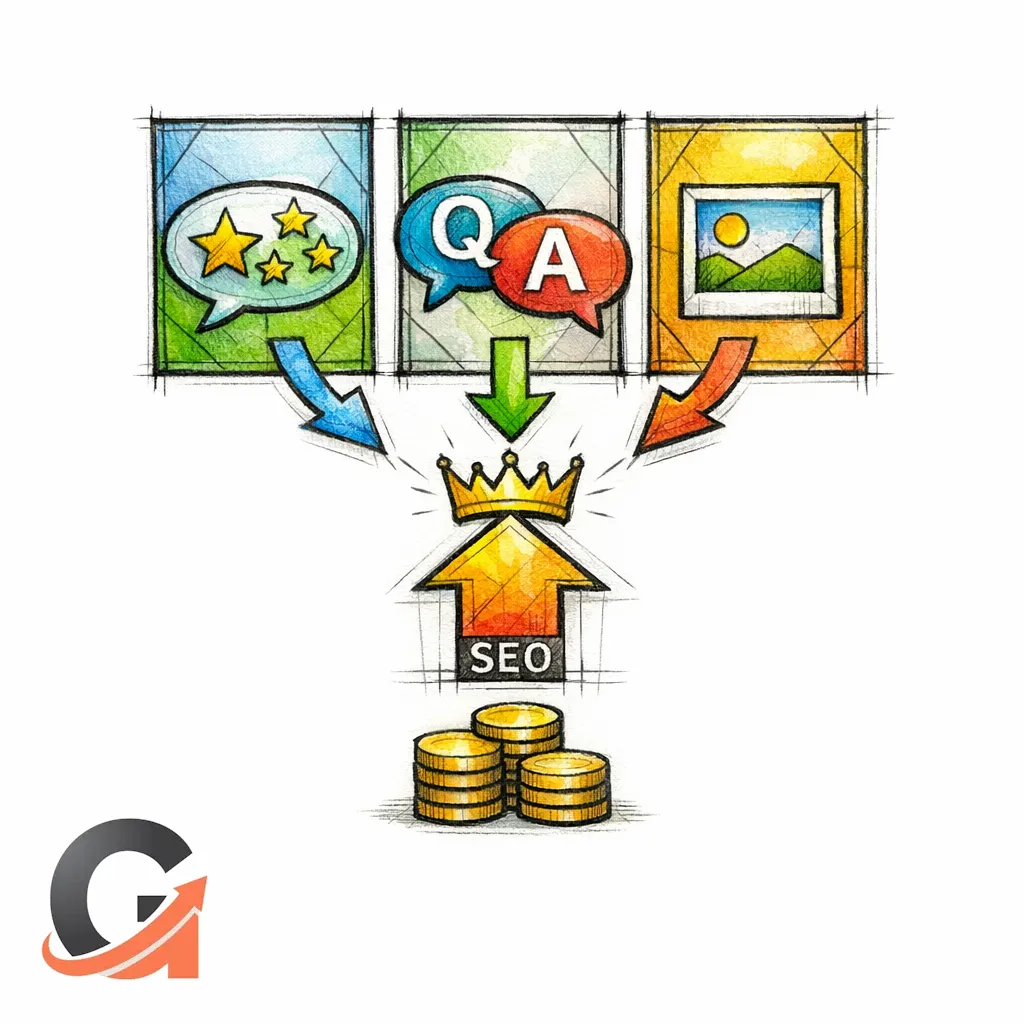
The three UGC assets that move rankings and revenue
1) Reviews that target long-tail intent (not just “love it!”)

Reviews become SEO fuel when they answer the questions people search. “Fits narrow feet,” “quiet on hardwood,” “stopped my breakouts,” “passed inspection,” “helped with back pain,” “works in humid climates” are all intent-rich phrases you rarely get from brand copy.
From a conversion standpoint, reviews reduce uncertainty. From a search standpoint, they expand topical coverage and match the language of real queries.
2) Product Q&A that captures comparison and “edge case” searches
Product Q&A is where your best long-tail content hides: compatibility questions, sizing clarifications, installation realities, what comes in the box, whether a part fits a specific model, and the “will this work if…” scenarios. Q&A content also reveals objections, which you can resolve in-page instead of losing the click.
When Q&A is well-structured and moderated, it becomes a living FAQ that reflects what customers actually care about, not what your team assumes they care about.
3) Customer photos (and short videos) that build trust and specificity

Customer photos are proof of reality: texture, scale, color in natural lighting, how a product looks in a real home, or how it performs in the field. They also create opportunities to add descriptive captions and alt text that align with long-tail searches, while improving engagement and conversion.
For certain verticals, photos are also compliance-sensitive. If you are health-adjacent, be careful: customer images and testimonials can expose protected details, and teams should understand what the HIPAA Privacy Rule requires when protected health information is involved.
UGC placement strategy: where it belongs on PDPs and category pages
Product detail page (PDP) optimization: make UGC indexable and useful
A PDP should not treat UGC as a “tab you never see.” If important content is buried behind interactions, lazy-loaded incorrectly, or blocked from crawling, you are praying for rankings without doing the liturgy.
Practical placement patterns that work:
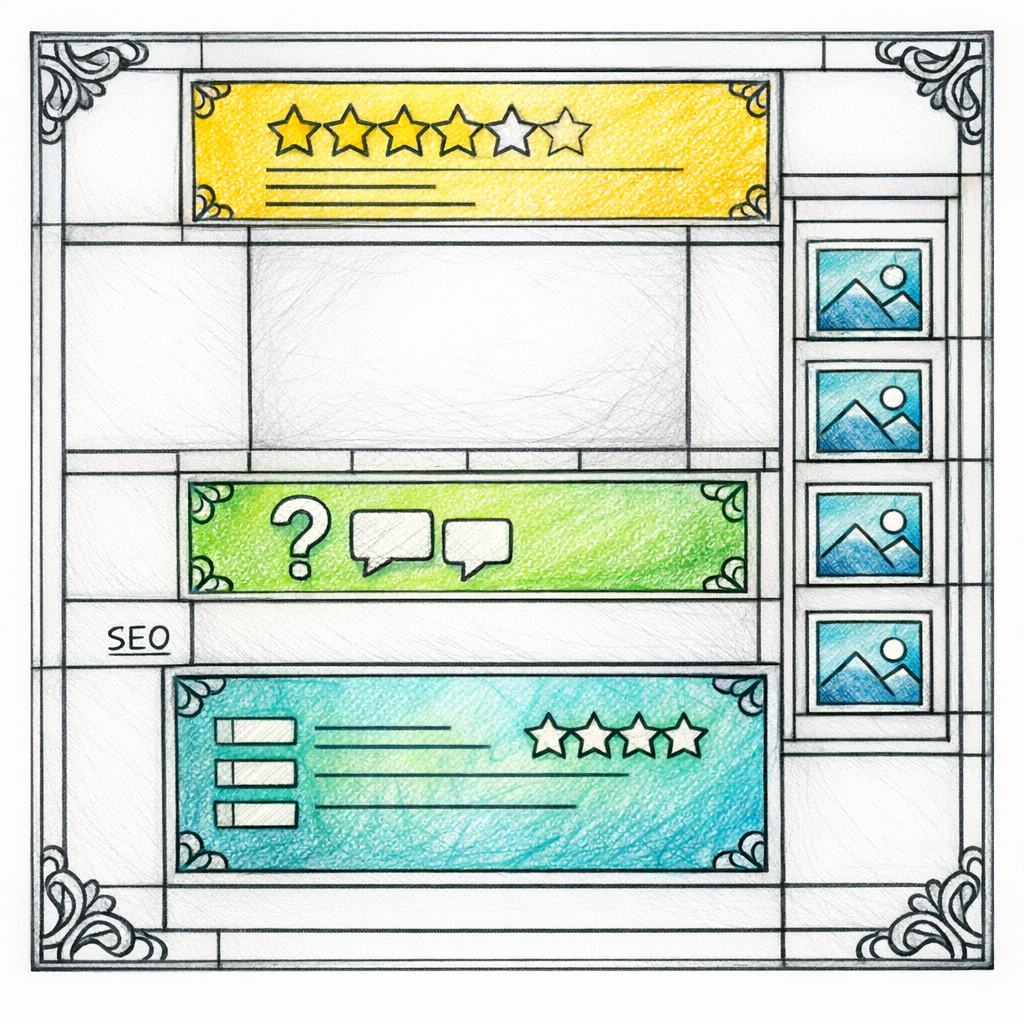
- Above-the-fold summary: show the rating average, count, and 2–3 highlighted review themes.
- Mid-page Q&A: place it near specs and “compatibility” content where it resolves purchase objections.
- Lower-page review library: include filters (size, use case, star rating) and sort options, but keep a crawlable default view.
- UGC gallery: a photo strip with a “see all customer photos” section, plus captions that reflect what’s shown.

If you want rich results, structure matters. Google’s Product structured data guidelines explain which properties are expected, and the review snippet guidelines outline when rating markup is eligible and when it is not.
Category page SEO: use UGC to win non-brand discovery

Category pages are where you win “best X for Y” and “X for [use case]” intent at scale. UGC can make category pages more than a grid of products by adding language and proof that match what people search before they know what brand they want.
Category-level UGC ideas that do not turn into thin fluff:
- “Top reasons customers choose this category”: mined from review themes across the set.
- Use-case blocks: “for apartments,” “for sensitive skin,” “for coastal climates,” “for small bathrooms,” mapped to filterable collections.
- Featured customer photos: show category outcomes (finished rooms, installs, before/after) with captions tied to use cases.
- Internal linking to buying guides: connect category intent to educational content that answers comparison questions.

The point is not to drown the category page in text. The point is to add the minimum effective content that improves relevance and conversion, and then use internal linking to move deeper into intent-specific pages.
Structured data and “review snippets”: do it the right way

Star ratings in search can lift qualified clicks, but eligibility is conditional. Google is clear about requirements, supported formats, and disallowed practices in its review snippet documentation.
Two rules keep brands out of trouble:
- Mark up what users can see: if the rating or review is not visible on the page, you are manufacturing a signal that users cannot verify.
- Avoid self-serving review markup: Google notes limitations around self-serving reviews, and violating them can remove rich result eligibility.
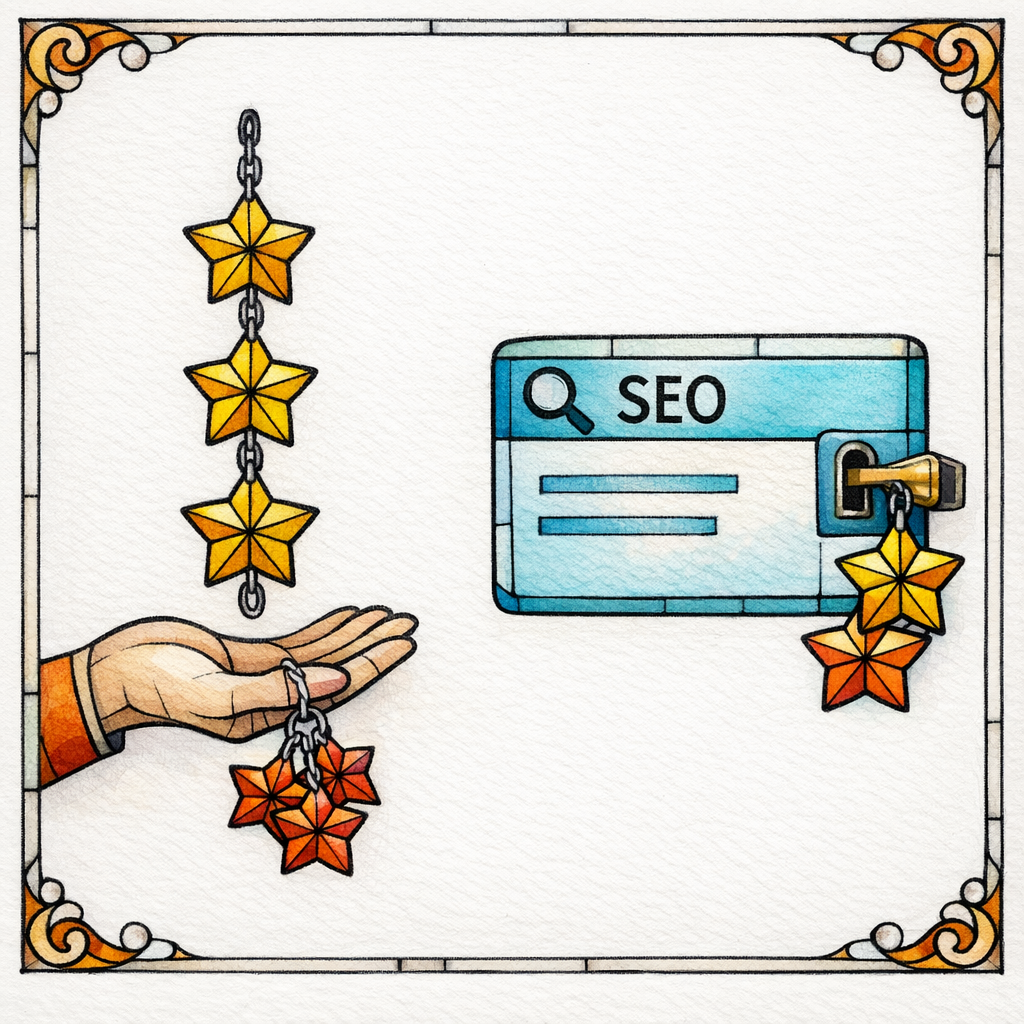
For product pages specifically, follow the fields and examples in Product structured data guidance. Treat structured data like a truth statement: it should reflect the content users actually experience on that URL.
Moderation, trust, and the anti-spam reality of UGC

UGC is powerful because it is messy. Your job is not to sanitize it into blandness; your job is to prevent spam, fraud, and policy violations from poisoning the page.
Google’s spam policies for web search are a useful north star here: deceptive behavior, manipulative tactics, and low-value scaled content are not “growth hacks.” They are self-sabotage.
Moderation rules that protect both SEO and conversion:
- Allow negative reviews: credibility rises when shoppers see balanced feedback and your responses.
- Block obvious spam: links, coupon dumps, irrelevant content, and templated review farms.
- Require specificity prompts: ask “What problem did it solve?” “What size did you buy?” “What model did you pair it with?”
- Verify purchase when possible: a “verified buyer” tag helps users trust the corpus.



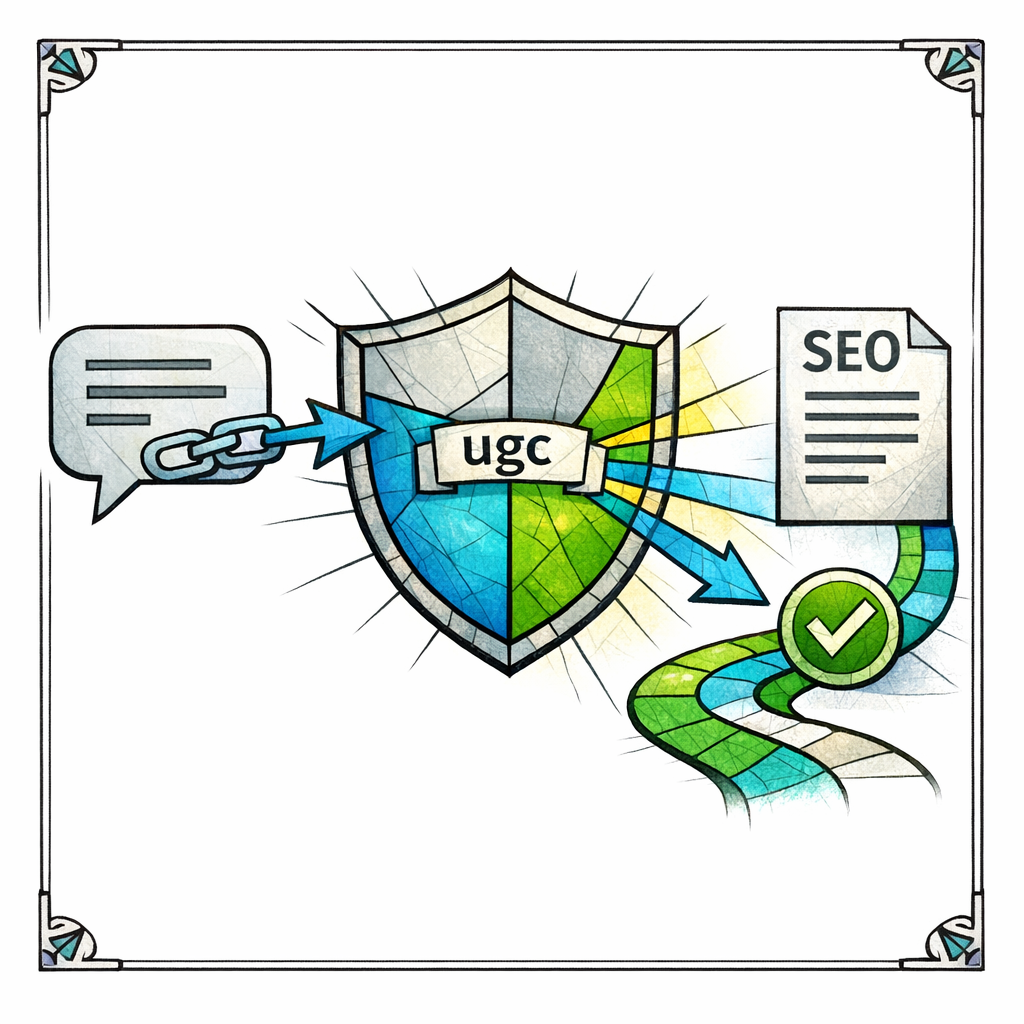
If your UGC includes outbound links (for example, community answers that paste references), use the right link attributes. Google explains how to qualify user-submitted links with rel attributes like ugc, which can reduce your exposure to link spam issues.
Turning UGC into long-tail e-commerce keywords (without guessing)
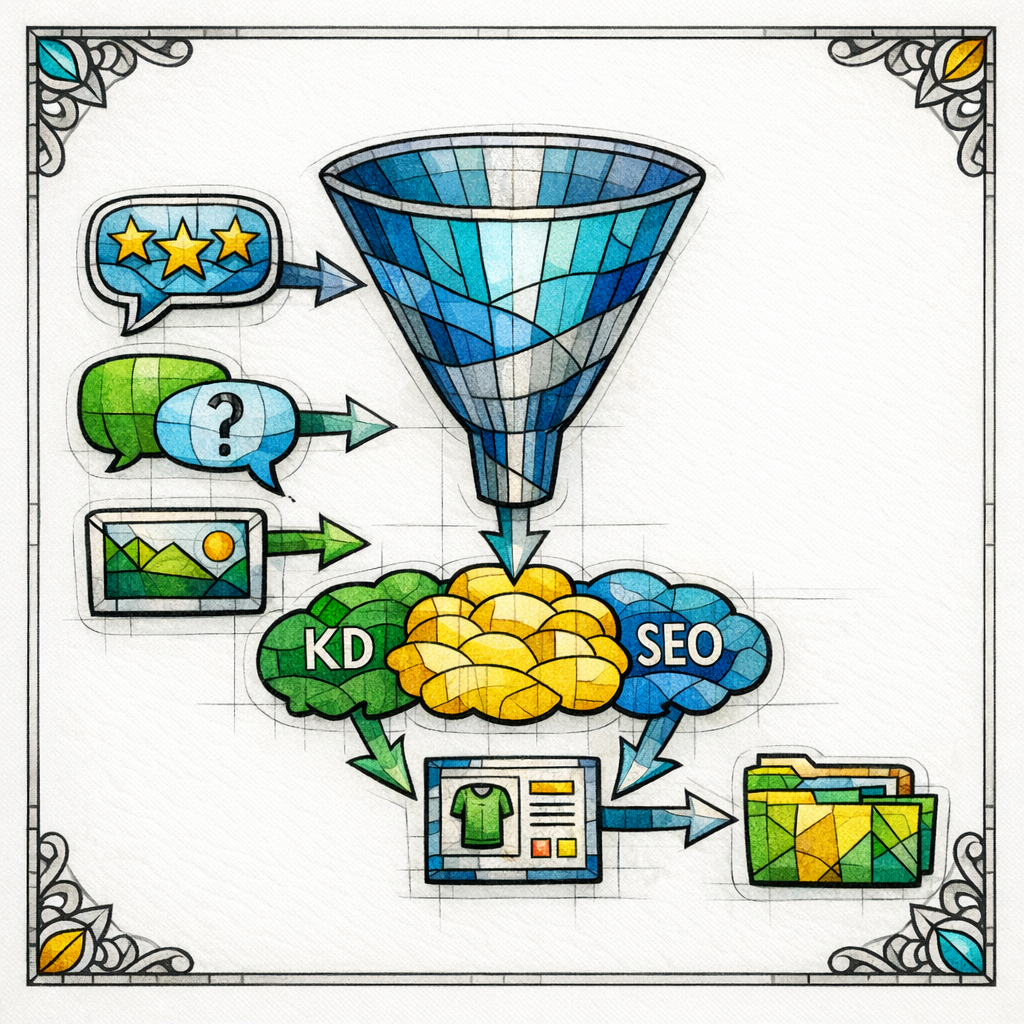
You do not need to “brainstorm long-tail keywords” when customers are handing them to you. The workflow is simple: collect language, cluster it, and surface it where it changes decisions.
Where to find keyword gold inside your own UGC:
- Review filters: the most-used filters often mirror common search modifiers (size, material, use case, compatibility).
- Repeated phrases: “runs small,” “true to size,” “works with iPhone 15,” “quiet,” “non-slip,” “low VOC,” “latex-free.”
- Objections in Q&A: “Will this fit…?” “Does it come with…?” “Can I use it on…?”
- Photo captions: customers describe contexts you should build dedicated collections for (“nursery,” “RV,” “rental-friendly”).
Then map these clusters to actions:
- PDP enhancements: add a short “Popular use cases” section, fed by real phrasing.
- Variant-level copy: if one color, size, or kit solves a specific use case, make that language visible on the correct URL.
- Category segmentation: create intent-focused subcategories or collections when demand is consistent and inventory supports it.
Common mistakes and misconceptions (the sins that kill UGC SEO)

Mistake 1: Hiding UGC behind widgets that search can’t reliably see
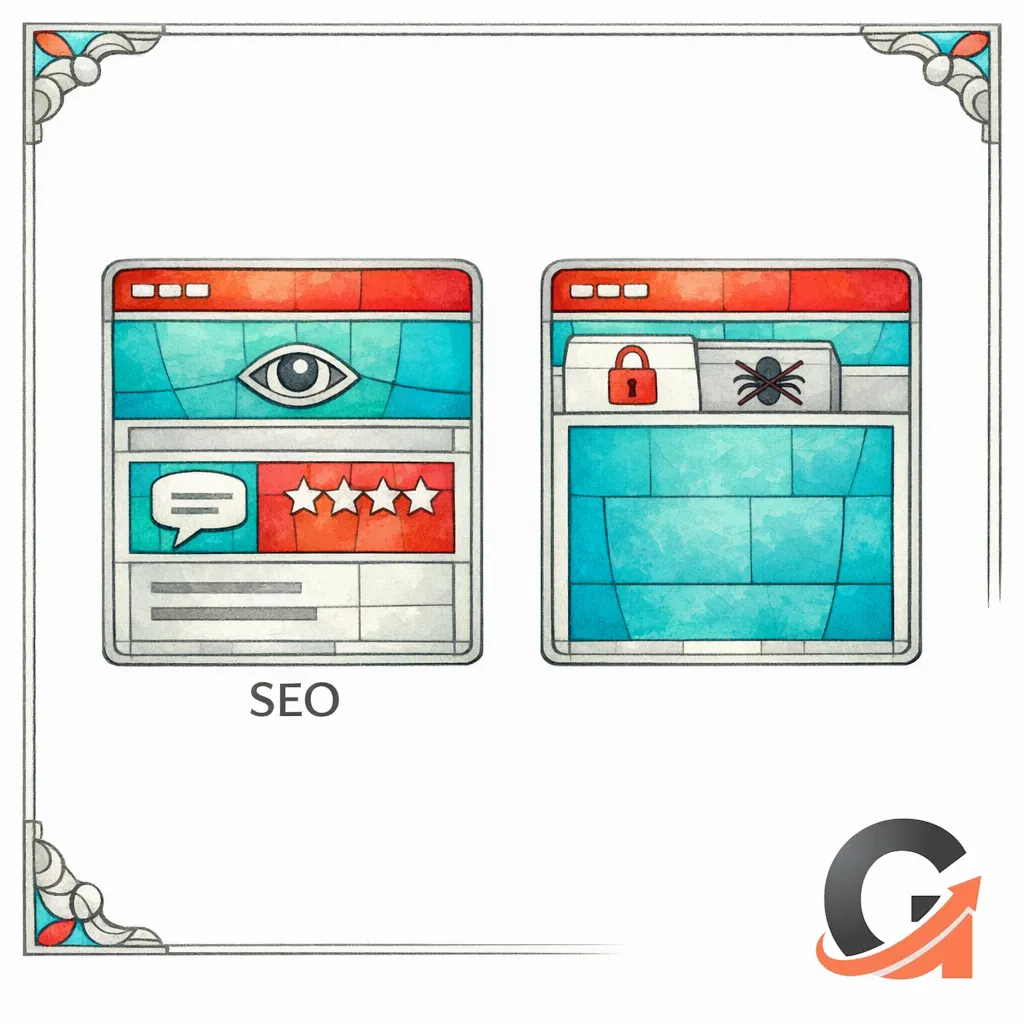
If your reviews load only after a user interaction, rely on blocked resources, or render in a way that prevents crawling, you are building conversion value while starving SEO value. Make sure key UGC content is available in the rendered HTML that crawlers can access.
Mistake 2: “We only publish 5-star reviews” (and everyone can tell)
This is not reputation management; it is reputation fabrication. Shoppers trust a mix of feedback, and search systems are designed to resist manipulation at scale, especially under evolving spam policies.
Mistake 3: Copy-pasting the same Q&A across multiple products
Duplicating UGC between similar products can create thin, repetitive pages. Keep shared answers in a guide or comparison page, then reference it from PDPs with internal links, while preserving product-specific Q&A where it truly applies.
Mistake 4: Marking up reviews incorrectly to chase stars
Structured data is not a cheat code; it is a mirror. Follow Google’s review snippet guidelines and Product structured data requirements so you do not create eligibility problems or misrepresent what users see.
Mistake 5: Treating UGC like it has no legal or disclosure requirements
If you incentivize reviews, run affiliate-style UGC, or use creators, disclosure standards matter. The FTC explains expectations in the Endorsement Guides FAQ, which is essential reading for brands that blend “UGC” with paid influence.
How UGC SEO applies beyond e-commerce (for service, healthcare, legal, SaaS)
The mechanics are similar even when you do not sell products in a cart. The core principle is the same: your customers and clients describe intent more accurately than your marketing team ever will.
- Home services: customer reviews and job photos can populate service-area and service pages with real-world terms (“same-day,” “permit,” “financing,” “quiet system,” “fixed leak behind wall”).
- Healthcare and health-adjacent: patient stories and FAQs can build trust, but handle privacy carefully and align content practices with the HIPAA Privacy Rule when applicable.
- Legal: testimonials and Q&A-style content can address “what happens next” intent, while staying compliant with jurisdictional advertising rules.
- SaaS: customer quotes, implementation questions, and integration Q&A become long-tail landing page inputs.
In every case, UGC gives you language that matches search intent, plus credibility signals that reduce friction once people land on the page.
What to do next: a practical UGC SEO checklist

- Audit your PDP template: ensure reviews, Q&A, and photo UGC are visible, crawlable, and not buried behind inaccessible interactions.
- Decide your UGC prompts: update review forms to ask for use case, sizing/fit, compatibility, and outcomes.
- Set moderation rules: publish balanced feedback, remove spam, and respond to recurring issues with on-page clarifications.
- Implement structured data carefully: align visible content with Product structured data and follow review snippet rules to protect eligibility.
- Qualify UGC links: apply rel=ugc guidance where users can submit outbound URLs.
- Create a “UGC-to-content” pipeline: every month, mine new review and Q&A themes and turn them into category subpages, buying guides, and PDP upgrades.
- Validate against spam risk: keep a hard line on authenticity, aligning practices with Google’s spam policies and avoiding anything that looks like scaled manipulation.
- Track impact: monitor organic landing page performance for PDPs and categories, plus conversion rate changes after UGC improvements.
Get a free SEO audit today!
If your PDPs and category pages are full of untapped reviews, Q&A, and customer photos, you are sitting on rankings you have not claimed yet. Content God can help you identify which pages should be upgraded first, which UGC blocks are holding back crawlability and conversions, and where long-tail e-commerce keywords are hiding in plain sight.
Get a free SEO audit today! If you are tired of shipping content and praying for results, stop praying for better search results and do the other thing too: Stop praying for better search results — download your free copy of the SEO Bible and learn the true path to SEO Salvation.
Whether you run an e-commerce catalog, a multi-location service business, a healthcare brand, or a SaaS company, the path is the same: turn real customer language into real search visibility, then turn that visibility into revenue. Content God stands ready, omnipresent in your content pipeline, generated on demand.