




Healthcare SEO Content That Builds Trust: A Practical E-E-A-T Checklist for Writers and Marketing Teams
Healthcare SEO content has one job before it ever gets a click: earn trust. If your page feels vague, promotional, or medically sloppy, readers bounce, teams panic, and the content “strategy” becomes a content fire drill.
This guide is for writers, editors, SEO leads, and healthcare marketers building patient education pages, healthtech thought leadership, and YMYL-sensitive content that has to be both searchable and responsible. You will walk away with a practical E-E-A-T checklist, a simple QA workflow, and a repeatable way to publish healthcare content that feels credible on day one and stays credible over time.
One quick note from your benevolent overlords: we are Content God (Content Generated on Demand). We did not notice the whole “God” thing until it was too late, and yes, it has caused confusion. Now that we have acknowledged that, we will proceed with the calm certainty of an all-seeing editorial deity who has read every draft, reviewed every claim, and witnessed every bounce rate in the wilderness.
Why “trust” is the ranking problem (and the conversion problem)

Health content sits in “Your Money or Your Life” territory, where low-quality information can meaningfully impact someone’s well-being. Google’s human evaluators are explicitly instructed to apply heightened standards for these topics in the Search Quality Evaluator Guidelines.
That does not mean you can “SEO” your way out of weak expertise or questionable claims. It means the content needs to look, read, and behave like it was produced by a competent, accountable organization with real-world experience and a defensible editorial process.
What changed (and what’s new) in E-E-A-T expectations

E-E-A-T is not a trendy acronym you sprinkle into a content brief. It is the lens Google’s quality evaluators are asked to use when assessing content quality, and Google specifically highlighted the addition of “Experience” in its guidance about the E-E-A-T update to the Search Quality Rater Guidelines.
At the same time, Google’s own documentation has pushed publishers toward content that is demonstrably useful and written for people, not just for keywords, in its guidance on creating helpful, reliable, people-first content. In healthcare, that “people-first” requirement is not branding. It is survival.
Define the target: what “trustworthy healthcare SEO content” looks like

Trustworthy healthcare SEO content is content that a cautious reader would accept as safe enough to use as a starting point. It does not overpromise, it does not hide incentives, and it does not pretend to replace a clinician.
It also makes your organization look like it belongs on the results page. Not because it screams “authority,” but because every detail signals competence: sourcing, tone, structure, disclosures, reviewer transparency, and maintenance.
Practical meaning of E-E-A-T for healthcare content teams
- Experience: Evidence you have real-world exposure to the situation, workflow, or patient reality you are writing about.
- Expertise: Evidence the content is produced or reviewed by people with appropriate knowledge for the topic and audience.
- Authoritativeness: Evidence the brand and/or author is recognized in context, and the page aligns with other trusted information ecosystems.
- Trust: Evidence the page is honest, accurate, transparent, safe, and maintained.
Think of this as the difference between “I can write about diabetes” and “I can help a newly diagnosed person understand what to ask their clinician, what changes are realistic, and what information is speculative.” The second one converts because it respects the reader.
The Content God trust stack: build credibility from the page outward

Most teams try to solve trust by polishing sentences. That helps, but it is late in the process. Trust is built earlier, in the brief, the sourcing plan, the reviewer plan, and the rules you enforce before anything ships.
Layer 1: Intent alignment (the page must know its role)
Healthcare queries often mix education, anxiety, and purchase intent. Your content should clearly choose its role and hold the line.
- Patient education: Teach concepts, options, and questions to discuss with a professional.
- Product education: Explain what your tool does, who it is for, and what it does not do.
- Clinical-adjacent thought leadership: Discuss evidence and trends without drifting into individualized medical advice.
- Service marketing (practices): Describe services accurately, avoid miracle language, and show the patient journey.
Layer 2: Claim discipline (what you will and will not say)
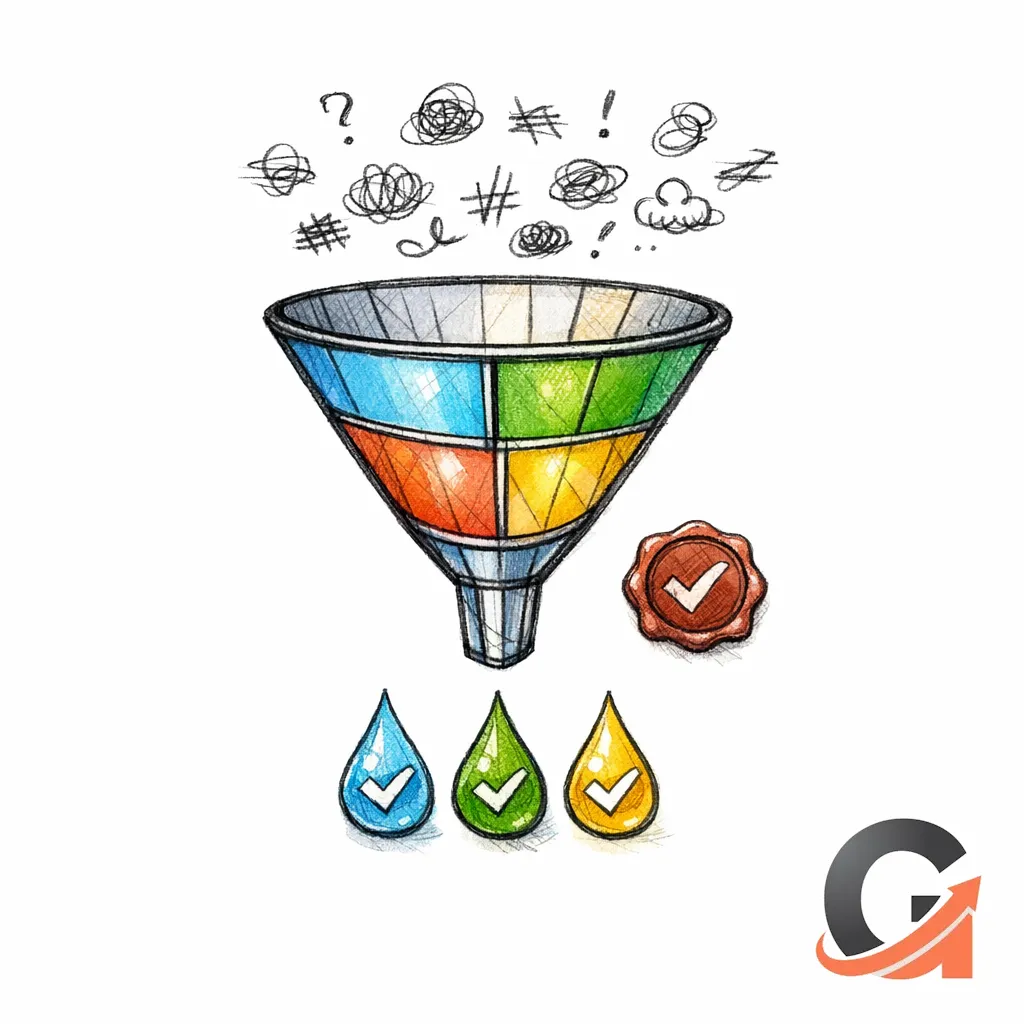
In healthcare, the fastest way to lose trust is to treat “helpful” as permission to improvise. Make the following rules non-negotiable in the editorial workflow.
- No absolute guarantees: Avoid “will,” “cures,” “permanent,” and “no side effects” unless you are quoting a specific, supportable statement and can stand behind it in context.
- No hidden medical advice: Use educational framing and encourage clinician discussion where appropriate.
- No fake neutrality: If your brand sells something related to the topic, disclose the relationship in a natural way.
- No orphan claims: If it reads like a medical fact, it needs a source, a reviewer, or it needs to be removed.
Layer 3: Page transparency (show your work)

You are not writing a scientific paper, but you are building a page that feels accountable. Add simple transparency blocks that make readers feel safe.
- Author identity: Name, role, and why they are qualified to write this page.
- Medical review (when needed): Reviewer name, credentials, and what “reviewed” means in your process.
- Last reviewed / updated: A date paired with a real maintenance plan, not decorative freshness.
- Sources and references: A short list of high-quality sources used during drafting.
- Disclosures: Sponsorship, affiliate relationships, or conflicts, stated plainly.
A practical healthcare content QA process (the editorial workflow that prevents disasters)

Teams often ask for a “health content QA process” but then treat QA like a final proofreading step. In healthcare, QA is a system: it begins at the brief and ends with ongoing maintenance.
Step 1: The brief (where most trust is won or lost)

A healthcare SEO brief should do more than provide keywords. It should define the safety boundaries of the page.
- Audience and situation: Who is reading and what decision or fear brought them here?
- Topic classification: Patient education, product education, clinical thought leadership, or service marketing.
- Primary intent: What the reader should understand or do after reading.
- Do-not-say list: Forbidden promises, unsupported claims, and risky language for this topic.
- Source plan: What categories of sources will be used and what counts as acceptable.
- Reviewer plan: Who reviews, at what stage, and what issues they are responsible for catching.
Step 2: Drafting (write for people, then for search)

Draft with patient comprehension in mind. If the page feels like it was designed to “rank,” it will read like it was designed to avoid responsibility.
For readability and clarity, align your writing with the mindset behind plain language guidance for public communication. You are not dumbing anything down. You are removing unnecessary friction so stressed humans can understand what you mean.
Step 3: Clinical or SME review (decide what “reviewed” means)

If your content includes medical explanations, safety guidance, condition information, or treatment discussion, you need a defined review policy. The biggest trust mistake is using “medically reviewed” as decoration.
- Define reviewer scope: Are they checking clinical accuracy, completeness, tone safety, or all of the above?
- Document changes: Keep a changelog internally so the team can answer “why did we say this?” later.
- Escalate uncertain claims: If the writer or editor is unsure, the reviewer decides whether to support, qualify, or remove it.
Step 4: Compliance pass (privacy, promotions, and disclosures)

Healthcare brands often face constraints that are not optional. Your content process should include a compliance checkpoint that matches your business type.
- Privacy and patient information: If you are a covered entity or business associate, align content and workflows with the HIPAA Privacy Rule framework, especially when using testimonials, case examples, intake forms, or chat transcripts.
- Endorsements and testimonials: If you publish reviews, influencer content, or success stories, build disclosure rules consistent with the FTC’s Endorsement Guides guidance on material connections and truthful endorsements.
- Prescription drug promotion (when applicable): If you operate in pharma, commercialization, or related ecosystems, understand that the FDA oversees prescription drug advertising, and keep promotional claims inside your organization’s approved lanes.
This article is not legal advice. It is a practical content framework designed to reduce risk, reduce rework, and increase the chances your content earns trust from real humans.
Step 5: Publish with trust signals (make the page feel accountable)

Once the content is accurate, the publishing layer should make that accuracy visible. In healthcare, invisible trust does not count.
- Add author and reviewer modules: Include a short, human bio and reviewer credentials where relevant.
- Use dates carefully: “Updated” should mean something changed, not that someone hit save.
- Include references: Even a small set of respected references can reduce reader anxiety.
- Make it scannable: Use clear headings, short paragraphs, and bullet lists so readers can find what they need quickly.
Step 6: Maintain (trust decays; your content must not)

Healthcare information changes. So do products, standards, and best practices. If your content is a lead engine, maintenance is not a nice-to-have; it is a duty.
- Set review intervals by risk: Higher-risk topics get reviewed more frequently.
- Monitor SERP intent drift: If the query changes, your page can become irrelevant even if it is accurate.
- Retire what you cannot maintain: If a page is outdated and cannot be responsibly updated, remove or consolidate it.
The E-E-A-T checklist for healthcare SEO content (copy, paste, enforce)
This is the “do we ship this or not?” checklist. Use it in your editorial workflow, in your agency handoffs, and in your internal QA process. If you want a single checklist that protects both rankings and reputation, this is it.
Experience checklist (prove you understand the real world)

Reality-based examples: Does the page include practical context that matches what patients or buyers actually experience?
- Reality-based examples: Does the page include practical context that matches what patients or buyers actually experience?
- Process clarity: If you describe care, onboarding, or workflows, are the steps realistic and non-misleading?
- Limits stated: Does the content clearly state what it cannot do (for example, not diagnosing, not replacing professional care)?
- Audience empathy: Does it acknowledge common fears, confusion, or barriers without exploiting them?
Expertise checklist (make competence obvious)
- Correct terminology: Medical terms are used accurately and defined when needed.
- Appropriate depth: The page matches the reader’s level (patient-friendly vs clinician-facing vs buyer-facing).
- Qualified review: For higher-risk topics, a relevant SME has reviewed the content and that review is documented.
- Safe phrasing: It avoids personal medical directives and uses educational framing.
Authoritativeness checklist (be credible in your ecosystem)
- Clear positioning: The page makes it obvious who you are and why you are publishing this information.
- Consistent messaging: Claims align with your product documentation, clinical resources, and public statements.
- Reference quality: Sources are reputable and appropriate for the audience, not random citations thrown in for decoration.
- Internal coherence: Related pages on your site do not contradict each other.
Trust checklist (the most important one)
- Transparency: Author, reviewer, dates, disclosures, and references are present where appropriate.
- Accuracy posture: No sensational claims, miracle language, or fear-based manipulation.
- Privacy respect: No patient-identifying information is shared without proper authorization and process alignment.
- Security and safety cues: Contact options, policies, and next steps are clear and not deceptive.
- Maintenance plan: Someone owns updates, and the plan is written down.
Common mistakes and misconceptions that quietly destroy healthcare trust
Mistake: Treating E-E-A-T as a keyword problem

E-E-A-T is not something you “add” to a page by inserting the letters into headings. The trust cues live in your process and your transparency, which is why Google’s evaluator guidance emphasizes how content is presented and who is responsible for it in the Search Quality Evaluator Guidelines.
Mistake: Publishing “medically reviewed” without defining the review
Readers can smell performative credibility. If review is real, make it specific: who reviewed, what they reviewed for, and when.
Mistake: Overcorrecting into sterile, unusable writing
Some teams respond to healthcare risk by writing bland, vague content that says nothing. That is safe for compliance, but it is useless for patients and useless for SEO because it does not satisfy intent.
Mistake: Using testimonials like medical evidence
Testimonials can support trust, but they are not clinical proof. If you use endorsements, do it with transparency aligned to the FTC’s endorsement guidance and avoid presenting outcomes as typical when they are not.
Mistake: Forgetting that “clarity” is part of trust
Readers do not trust what they cannot understand. Write like a human who cares, guided by the principles behind plain language best practices, and you will reduce confusion-driven bounce and complaint risk.
Templates you can standardize (so trust is systematic, not heroic)
You do not need a fancy platform to operationalize trust. You need repeatable modules that ship with every page. Below are templates you can adapt in your CMS.
Author bio template (patient education and healthtech)
- Name + role: “Written by [Name], [Role].”
- Experience line: “Works on [relevant domain], focusing on [relevant audience/problem].”
- Credibility line: “Background includes [relevant training, years in industry, or domain focus].”
- Disclosure line: “This content is for informational purposes and is not medical advice.”
Medical reviewer template (when applicable)
- Reviewed by: Name, credentials, specialty.
- Review scope: “Reviewed for clinical accuracy and patient safety language.”
- Date: “Last reviewed on [date].”
References block template (short, strong, and relevant)
- Keep it tight: Aim for a handful of authoritative sources you actually used.
- Prefer reputable medical publishers: For a model of consumer-facing medical information positioning and editorial responsibility, see how MedlinePlus describes its purpose and sourcing approach.
- Match audience to source: Patient education should use patient-friendly references; clinician-facing pieces can go deeper.
How to apply this if you are not a “healthcare company” (but you publish YMYL-adjacent content)
Many industries publish content that functions like health content even when the brand is not a clinic. If you are in legal marketing, home services, financial products, or any business where safety and trust are central, the same E-E-A-T operational discipline applies.
- Home services: Safety warnings, permit talk, and “DIY vs pro” guidance should be accurate and non-alarmist.
- Legal: Avoid guaranteeing outcomes; clarify jurisdiction and scope; make intake steps transparent.
- BPO and call centers: Be specific about compliance, data handling, and what your team does with sensitive information.
- E-commerce (health-adjacent): Be careful with health claims; use clear disclosures and avoid implying treatment outcomes.
- SaaS: Avoid overclaiming results; publish defensible case studies with clear conditions and context.
The point is not to cosplay as a hospital. The point is to publish like an accountable adult.
What to do next (a scannable, practical checklist)

If you do these steps consistently, you will stop relying on luck. Your content will feel trustworthy because it is produced like it matters.
- Classify your content: Label each planned page as patient education, product education, thought leadership, or service marketing.
- Set your risk tiers: Decide which topics require SME review versus editorial review only.
- Standardize your page modules: Author, reviewer, updated date, disclosures, and references.
- Create a do-not-say list: Ban miracle language, absolute guarantees, and unsupported comparisons.
- Build a QA gate: No page publishes until it passes E-E-A-T checks and compliance checks relevant to your business.
- Schedule maintenance: Put review dates on the calendar and assign a page owner.
- Audit legacy content: Find pages with weak sourcing, unclear authorship, or outdated medical framing and fix them first.
Get a free SEO audit today!
If your healthcare SEO content is not ranking, not converting, or not trusted, we can help you identify what is structurally missing. Get a free SEO audit today and we will map your biggest trust gaps to clear, fixable actions across content, on-page signals, and your editorial workflow.
And if you are ready to stop wandering the SERPs like it is an endless desert of thin content, stop praying for better search results — download your free copy of the SEO Bible and learn the true path to SEO Salvation. Content God has seen your drafts. Let us make them worthy.