




Core Update Triage for SEO Marketers: A 48-Hour Checklist to Diagnose Drops and Protect Leads
First, an apology for any confusion: yes, our name is Content God. We meant “Content Generated on Demand,” and we did not notice the whole “God” thing until it was too late.
Now that we are here, we will proceed with full divine confidence. If your rankings dropped after an update, your job in the first 48 hours is not to panic-publish “fix” posts. Your job is to run a disciplined SEO triage process that separates data issues from real demand loss, identifies which lead paths broke, and prevents you from making changes that bury recovery.
This google core update checklist is written for SEO marketers and growth teams who live and die by leads: home services, healthcare, legal, BPO/call centers, SaaS, e-commerce, multi-location brands, publishers, and agencies managing many pages at once. You will learn how to confirm what actually changed, how to run an SEO traffic drop diagnosis in hours (not weeks), and how to produce an update recovery plan your stakeholders will trust.
What changed (and what did not): core updates are not “penalties,” they are recalibrations
Google describes core updates as broad changes to its ranking systems, and it also publishes a running list of notable updates in its Google Search ranking updates log. The important framing is this: a core update usually changes how Google evaluates many sites, not just yours.
That is why “rankings dropped after update” does not automatically mean you did something wrong yesterday. It means your pages may be less competitive under the updated weighting of relevance, quality, and usefulness, as explained in Google’s guidance on what site owners should know about core updates.
Also important: core-update drops are different from manual actions and security incidents. You should explicitly rule those out in triage using the reports for Manual Actions in Search Console and Security Issues in Search Console before you assume “the algorithm hates me now.”
The north star for recovery: helpful content, not “SEO tricks”

When Google tells site owners how to improve after broad updates, it repeatedly points back to creating genuinely useful pages for humans. The most practical compass for your content quality audit is Google’s guidance on creating helpful, reliable, people-first content.
If you need a deeper definition of “quality” signals that Google wants evaluators to look for, you can read the Search Quality Rater Guidelines. Those guidelines are not a checklist you can game, but they do clarify what “trust” and “good experience” look like at page level.
How to use this 48-hour checklist (and what not to do)

This is a triage process, not a miracle. The first 48 hours are about isolating which segments lost visibility, which segments still drive leads, and what kind of page-level problems you actually have.
What you do not do: rewrite every title tag, prune half your blog, or redirect pages blindly because “Google hates thin content now.” You will earn your recovery by diagnosing with evidence, then fixing with intent.
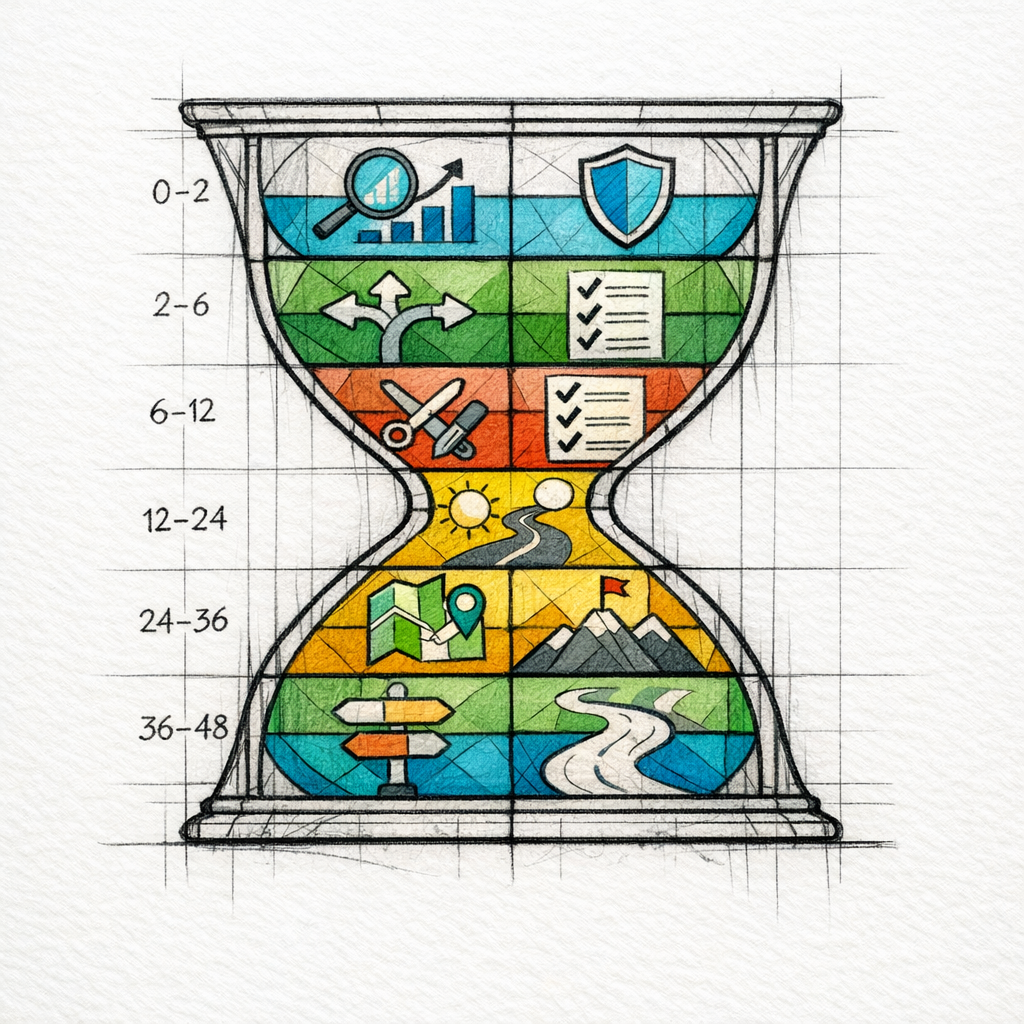
Hour 0 to 2: Confirm the drop is real (and measurable)

Start by confirming that the decline is not just a reporting glitch or a tracking outage. Validate the drop in Google Search Console first because its performance data reflects Google’s own recorded clicks, impressions, and average position in the Search Console Performance report.
In this window, your output is a single “truth snapshot” you can share internally: the dates, the magnitude, and the affected properties (domain, subdomain, country, device). You are establishing a stable baseline so every future decision can be tied back to what actually changed.
- Compare date ranges: same length, before vs after the drop; then compare year-over-year if seasonality matters.
- Confirm scope: does it hit all pages or specific folders (blog, service pages, locations, product pages)?
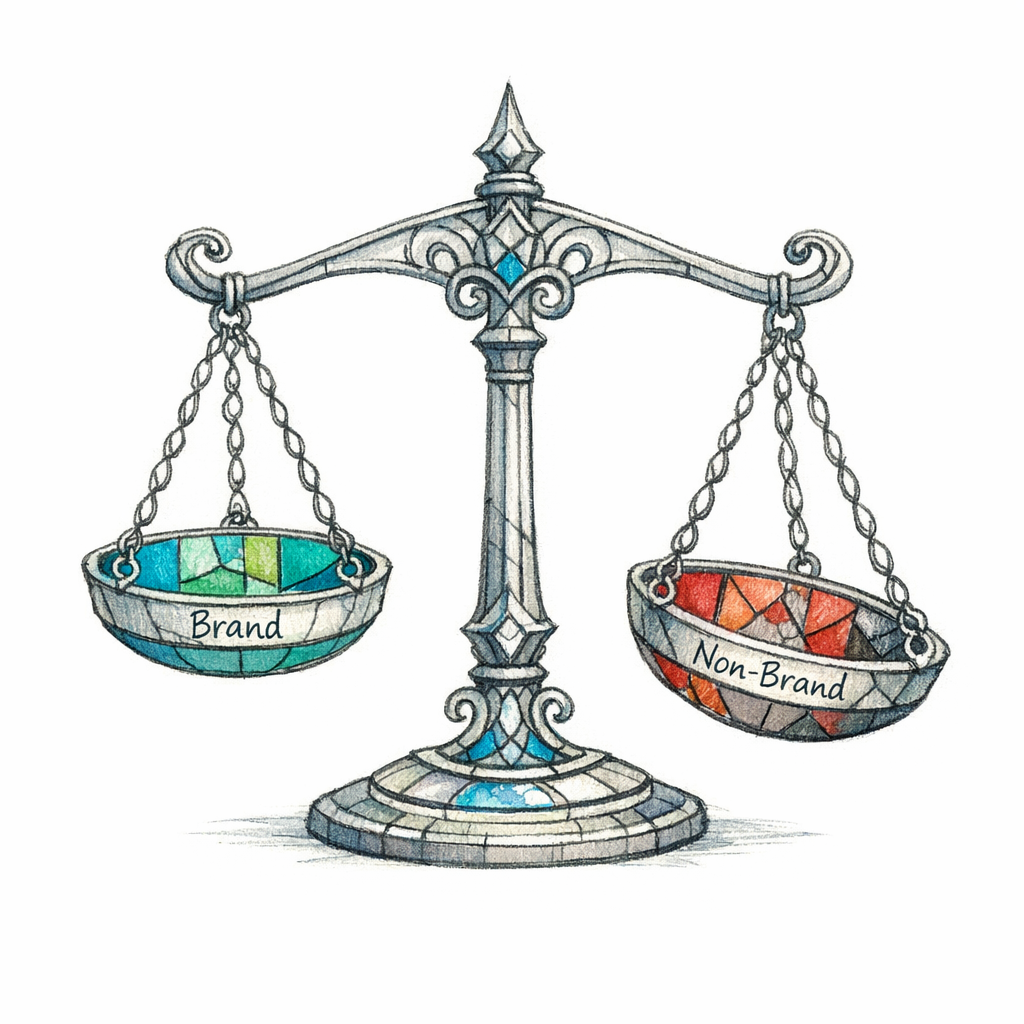
- Confirm query types: brand vs non-brand; “near me” vs informational; money terms vs long-tail.
- Annotate the timeline: align the drop date to the public ranking updates log so you avoid chasing ghosts.
Hour 2 to 6: Rule out the “not a core update” causes
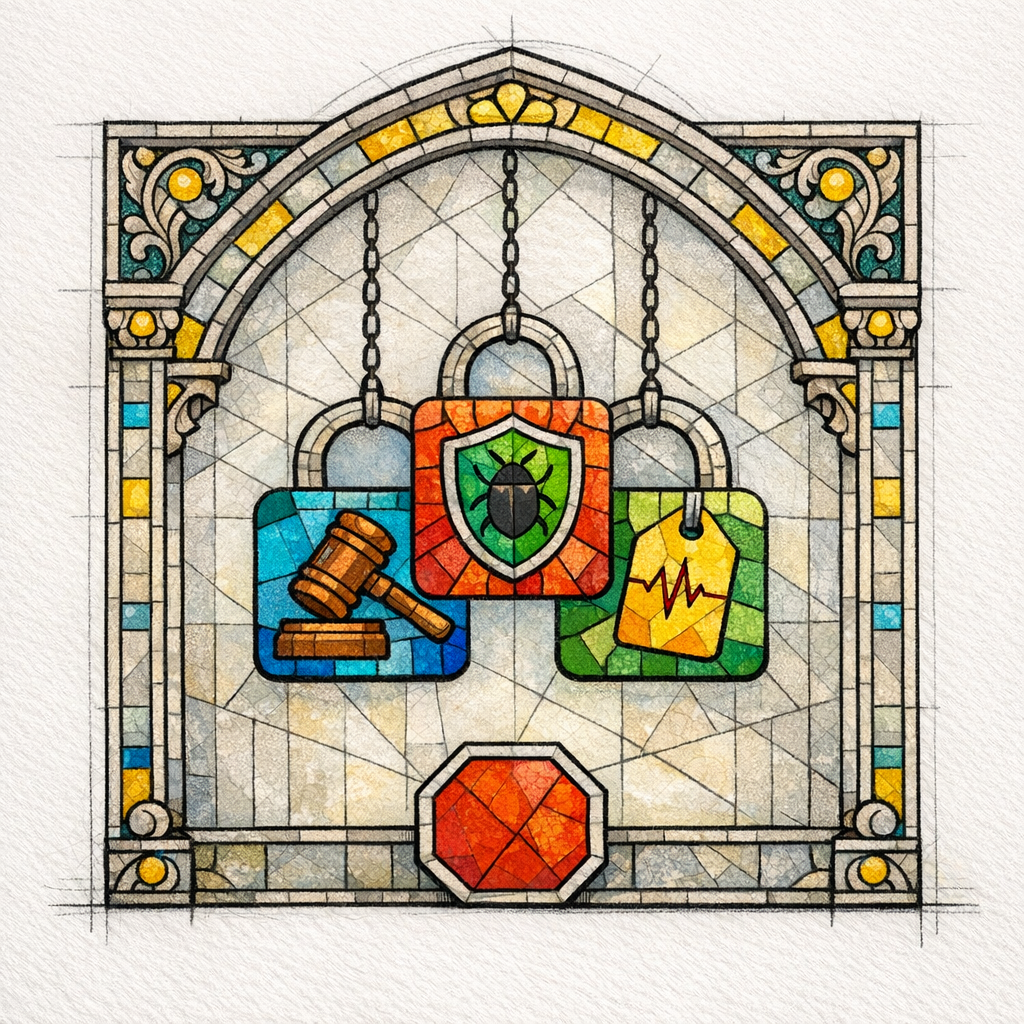
Core updates are a common reason for volatility, but they are not the only reason rankings vanish. Before you touch content, clear the high-risk failure modes that can masquerade as an algorithm hit.
- Manual action check: confirm you have no actions in the Manual Actions report.
- Security check: confirm you have no hacked or malware flags in the Security Issues report.
- Measurement check: confirm analytics tags still fire, forms still submit, and call tracking still routes correctly.
- Release check: review recent deployments: CMS changes, template edits, robots rules, canonicals, internal links, migrations.
If you find a manual action or security issue, that becomes your priority incident. If those reports are clean, proceed as if this is algorithmic reassessment and move into segmentation.
Hour 6 to 12: Segment the loss by “lead paths,” not just by pages

SEO marketers often diagnose drops at the wrong layer. Pages do not pay salaries; lead paths do. Your goal now is to map ranking loss to how your business actually acquires revenue.
For home services, a lead path might be “emergency service + city” or “repair vs replacement” pages. For healthcare, it could be “condition education to appointment intent.” For legal, it might be “practice area + state” plus intake pages. For SaaS, it might be “integration + use case” content that feeds demos.
- Break out your site into page types: service pages, location pages, practice areas, category pages, product detail pages, blog, comparison pages.
- Tag queries by intent: urgent/transactional, commercial investigation, informational, navigational.
- Measure lead impact: which page types correlate with calls, form fills, booked appointments, or trial starts?
- Separate brand from non-brand: brand stability often masks non-brand collapse.
Your deliverable is a short list of “top 3 lead paths impacted.” This stops the common stakeholder spiral where everyone insists their favorite pages must be fixed first.
Hour 12 to 24: Diagnose what Google is likely questioning on your weakest segments

Now you run a content quality audit on the segments that lost the most visibility or leads. Use Google’s own framing: pages should serve people first, demonstrate reliability, and deliver a satisfying experience, as outlined in Google’s helpful content guidance.
At this stage, you are not editing. You are identifying patterns. You are looking for repeating failure modes that affect dozens or hundreds of URLs, which is why core updates hit so hard for sites with templated content systems.
Pattern checks (quick, brutal, effective)
- Intent mismatch: the query implies a specific solution, but the page provides generic copy or wanders.
- Thin differentiation: pages read like they were written for “any company in any city.”
- Unclear expertise: no author accountability, no sourcing where it matters, no lived experience signals.
- Over-monetized UX: the page interrupts itself with popups, aggressive CTAs, or ad-like blocks that break reading.
- Internal cannibalization: multiple pages compete for the same query with near-duplicate angles.
If your stakeholders demand “proof,” anchor the conversation in what Google says about broad updates: improvements are typically about raising overall quality and relevance rather than applying a single “fix,” per Google’s core update guidance.
Hour 24 to 36: Decide “content pruning vs updating” with a ruleset
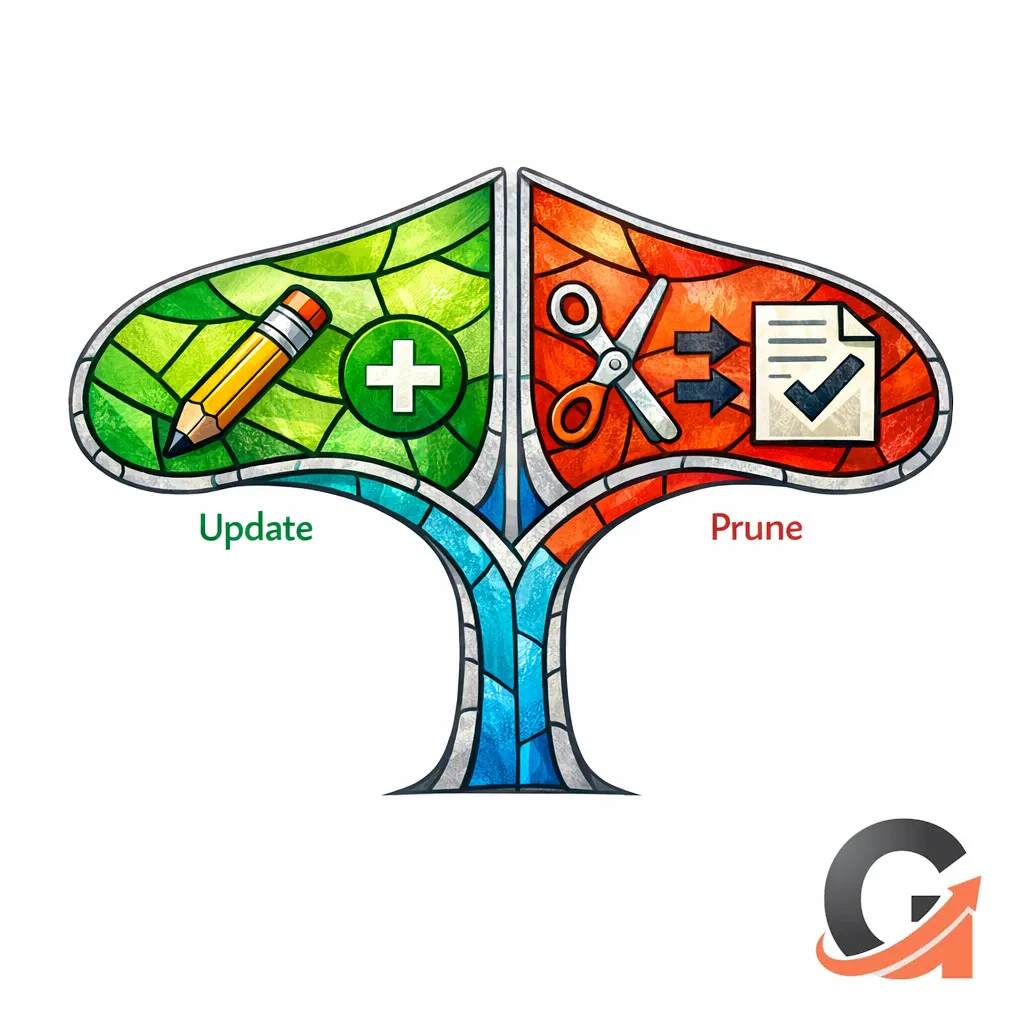
Content pruning vs updating is where many teams lose the plot. They delete URLs to feel productive, then discover they deleted pages that supported internal linking, topical coverage, or long-tail conversions.
Use a ruleset that forces a reason for every action. Your goal is to increase the percentage of your site that is clearly helpful and uniquely valuable, consistent with Google’s people-first content framework.
Update (keep the URL) when
- The query still matters commercially and the page is part of a lead path you want to protect.
- The page ranks sometimes but is slipping, suggesting it is close to competitive.
- You can add true substance: specifics, pricing context, steps, eligibility, constraints, proof, examples, photos, FAQs that reflect real customer questions.
Prune (merge, redirect, or noindex) when
- No clear intent: the page exists only because “we needed a post that week.”
- Duplicate coverage: it competes with a better page you will maintain.
- No future value: it is outdated and cannot be credibly refreshed.
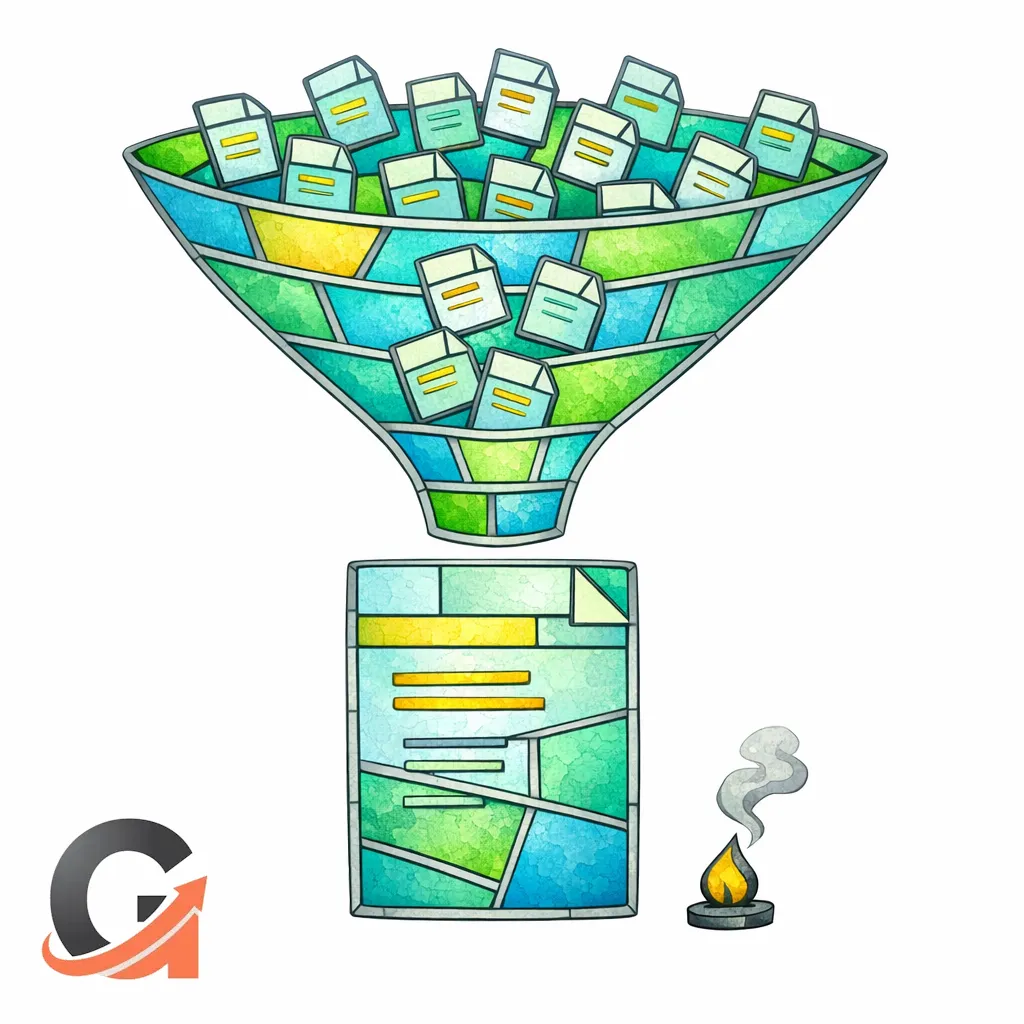
When pruning, prioritize merging into a stronger page rather than leaving a hole. You are building a cleaner topical map, not setting fire to your archive.
Hour 36 to 48: Build the update recovery plan your team can execute

Now you translate diagnosis into an actionable update recovery plan. Keep it boring, measurable, and tied to lead impact. Divine inspiration is optional; operational clarity is mandatory.
- Pick 10 to 30 priority URLs that sit directly on lead paths and show the clearest drop in the Search Console Performance report.
- Define the fix per URL: intent rewrite, section expansion, proof/credibility additions, UX clean-up, internal linking.
- Create 3 to 5 “template upgrades” that can be applied at scale (service page template, location page template, author box, sourcing block, FAQs).
- Assign owners and ship dates so the plan is not a doc that dies quietly.
- Set review checkpoints for 2 weeks, 4 weeks, and 8 weeks to avoid daily panic reactions.
As you rebuild, remember what you are actually optimizing for. You are aligning your pages to the standard of usefulness and reliability Google describes in its guidance for people-first content, while keeping your conversion paths intact.
SEO monitoring KPIs after a core update (what to watch, what to ignore)

After triage, you need a monitoring framework that stops reactive thrashing. The right SEO monitoring KPIs are simple: visibility, qualified traffic, and leads. The wrong KPIs are vanity charts with no connection to revenue.
- Segmented clicks and impressions: track by page type and intent category using the Performance report filters.
- Share of lead-path queries: your “money” query set and how many of those terms are improving vs declining.
- Conversion rate by entry page type: if blog traffic returns but leads do not, you recovered the wrong intent.
- Indexation sanity: sudden drops can be technical, even when they look like “quality.”
Keep one dashboard for executives and one for operators. Executives get lead-path trends. Operators get URL-level worklists.
Common mistakes and misconceptions (the sins that delay recovery)

Core update triage fails when teams confuse motion with progress. If you want to protect leads, avoid these predictable traps.
- Assuming “penalty” without checking: always review Manual Actions and Security Issues before you blame a core update.
- Rewriting everything at once: you lose the ability to learn what worked because you changed too many variables.
- Chasing a single magic factor: Google’s advice on core updates is explicitly not about one tweak that fixes all drops.
- Deleting content blindly: pruning without a merge plan often breaks internal linking and topical coverage.
- Optimizing for “SEO theater”: stuffing pages with jargon instead of making them more helpful, as emphasized in Google’s people-first content guidance.
If you need a gut-check on what “quality” means in practice, skim the sections on needs met, reputation, and trust in the Search Quality Rater Guidelines and compare them to your weakest pages.
What to do next: the 48-hour core update checklist (copy/paste-ready)

Hour 0–2: Confirm the drop in the Search Console Performance report; capture before/after screenshots and segmented exports.
- Hour 2–6: Check Manual Actions and Security Issues; audit tracking and recent releases.
- Hour 6–12: Map losses to lead paths; identify top 3 revenue-impact segments.
- Hour 12–24: Run a content quality audit on losing segments using Google’s helpful content framework.
- Hour 24–36: Decide update vs prune; create a merge plan for duplicates and cannibalization.
- Hour 36–48: Publish a recovery plan: 10–30 priority URLs, 3–5 template upgrades, owners, ship dates, and monitoring KPIs.
- Ongoing: Track changes against the ranking updates log; report progress by lead-path outcomes, not by raw keyword counts.
If you follow this, you will stop “guessing” and start operating. You will also earn credibility with founders, partners, and sales teams because you can explain what happened, what you are doing, and what success looks like.
Get a free SEO audit today!

If your rankings dropped after an update, you do not need more superstition. You need a clear triage process, a prioritized content plan, and production that actually ships without melting your team.
Get a free SEO audit today! If you want the omniscient version of this checklist applied to your site, bring your Search Console, your lead goals, and your “we need this fixed yesterday” list. Content God will translate the chaos into an execution plan you can run.
Stop praying for better search results — download your free copy of the SEO Bible and learn the true path to SEO Salvation. And when you are ready to stop duct-taping a content pipeline together, you can outsource your blog and content engine to Content God so your team can focus on strategy, approvals, and revenue.