



Virtual Receptionist and Call Center SEO: Pages That Capture High-Intent Searches
Virtual receptionist companies, answering services, and call centers do not lose SEO because they are “bad at content.” They lose because their websites do not match the way buyers actually search when they are ready to book a demo, request pricing, or switch providers.
This guide is for BPO and receptionist-service marketing teams, agencies building lead-gen sites, and founders who need pages that convert “I need this now” searches into booked calls. You will learn which page types capture high-intent queries, how to structure them, what to say to earn trust, and what to avoid if you want rankings that stick.
One more thing. We are Content God (Content Generated on Demand). We did not notice the whole “God” thing until it was too late, and yes, that has caused confusion. Sorry.
Now the apology is over. Welcome to the sermon: high-intent SEO is not a blog schedule. It is a scripture of landing pages that answer buying questions with such clarity that the algorithm, the buyer, and your sales team all say amen.
Why “virtual receptionist SEO” is different from most B2B SEO

Most B2B sites overproduce informational content and underproduce decision pages. In the virtual receptionist and call center world, the money terms are not philosophical. They are transactional, specific, and full of modifiers like “24/7,” “pricing,” “HIPAA,” “legal intake,” “after-hours,” and “for small business.”
Google consistently pushes sites toward content that is genuinely useful, transparent, and made for people first, not for ranking tricks. Build around the expectations in Google’s guidance on creating helpful, reliable, people-first content, and your high-intent pages stop feeling like “SEO pages” and start feeling like the exact page a buyer hoped to find.
Pages that capture high-intent searches (the ones that actually close)
1) The “core service” landing pages (your money pages)

If you only build one set of pages, build these. They map directly to the primary keywords people type when they want a provider, not a lecture.
- Virtual receptionist service (general)
- Answering service (general)
- Call center services (inbound, outbound, overflow)
- 24/7 answering service (availability is a buying trigger)
- Appointment scheduling and intake (outcome-focused)
What makes these pages rank is not fluff. It is specificity: who the service is for, what problems it fixes, what coverage looks like, what languages you support, what “live answer” means in your model, and what the first 30 days feel like.
Write each service page like a product page. If the reader cannot tell what you do, who does it, and how it will work for their business in under 60 seconds, that page is not high-intent. It is high-bounce.
2) “For industry” pages (where trust gets decided)

Industry modifiers are not just SEO. They are buyer anxiety revealed as a keyword. “Medical answering service” means “do you understand compliance and patient trust.” “Legal intake” means “do you know how to qualify cases, route urgent calls, and document details.”
- Medical answering service (and related healthcare terms)
- Legal intake answering service (law firms, mass tort, PI, etc.)
- Home services answering service (HVAC, plumbing, electrical, roofing, pest control, and similar)
- SaaS support and helpdesk overflow
- E-commerce customer support and order status calls
For healthcare: avoid vague claims. If your service touches patient information for a covered entity, talk to counsel and align your marketing with what it means to be a HIPAA business associate. Even if you are not, buyers will search as if you are, and your page must address the concern in plain language.
For legal: talk about conflict checks (if offered), lead qualification, call summaries, and escalation paths. For home services: talk about after-hours booking, dispatch messages, seasonal overflow, and capturing missed calls that become tomorrow’s revenue.
3) “Use case” pages (intent hiding inside workflows)
Some of the best converting searches do not include “virtual receptionist” at all. They describe the pain. That is your opportunity to own a category of problems.
- After-hours answering (for emergencies and missed-call capture)
- Overflow call handling (seasonality and ad spikes)
- Lead qualification and intake (BPO marketing and sales ops)
- Appointment booking (service businesses and clinics)
- Multi-location call routing (franchise and regional brands)
Each use-case page should include: what triggers the need, what happens when calls are missed, how your workflow works, and what proof you can offer. Buyers do not want “solutions.” They want the exact steps that will happen when their phone rings at 2:17 a.m.
4) Pricing and “how much does it cost” pages (the confessional booth)

High-intent visitors ask pricing questions early, even if they still request a quote. If you hide behind “contact us,” you force uncertainty, and uncertainty is a conversion killer.
You do not need to publish every number to win. You do need to publish a pricing model (per minute, per call, per agent, per package), what typically changes cost, and what is included. If you offer add-ons, list them with plain explanations. Clarity is conversion, and conversion is how SEO becomes revenue.
5) Comparison pages (where you win the switch)

Comparison pages are not only “You vs Competitor.” They are also “virtual receptionist vs answering service,” “in-house vs outsourced,” and “call center vs chatbot.” These pages capture buyers who are close to choosing and are assembling justification for a decision.
- Your brand vs competitor (measured, factual, and updated)
- Best answering service for doctors (if you can back it up with real criteria)
- Alternative to [competitor] (focus on fit, not insults)
- Compare two service models (human vs AI, offshore vs onshore, 24/7 vs business hours)
Write comparisons like you expect them to be screenshot and forwarded to a CFO. Use clear criteria (coverage, onboarding, scripting, QA, reporting, integrations, security posture, and pricing model). If you cannot be honest about tradeoffs, do not publish the page.
6) Location and “service area” pages (when local intent exists)

Some virtual receptionist brands sell nationally and forget that many buyers still search locally. If you have a physical presence, local visibility matters, and location pages can convert remarkably well.
Keep location pages real. They should describe actual coverage, staffing, and what clients in that region typically need. If you use Google Business Profile, follow the Google Business Profile guidelines for representing your business so your visibility is anchored in legitimacy, not gimmicks.
7) “Lead generation call center” pages (for BPOs selling growth)

When you sell outbound and appointment setting, you are not selling calls. You are selling pipeline. Pages targeting “call center lead generation,” “lead gen call center,” and “outbound call center lead generation” must speak the language of revenue leaders.
What high-intent buyers want to see here is not hype. They want constraints, process, and control: how lists are sourced (if applicable), how compliance is handled, how scripts are built and approved, how reporting works, and what success metrics look like for their use case.
If your service includes telemarketing or outbound campaigns, marketing claims should align with the FTC’s Telemarketing Sales Rule expectations. This is not just legal hygiene; it is trust. Trust is the currency of lead gen.
How to structure these pages so Google and humans can understand them
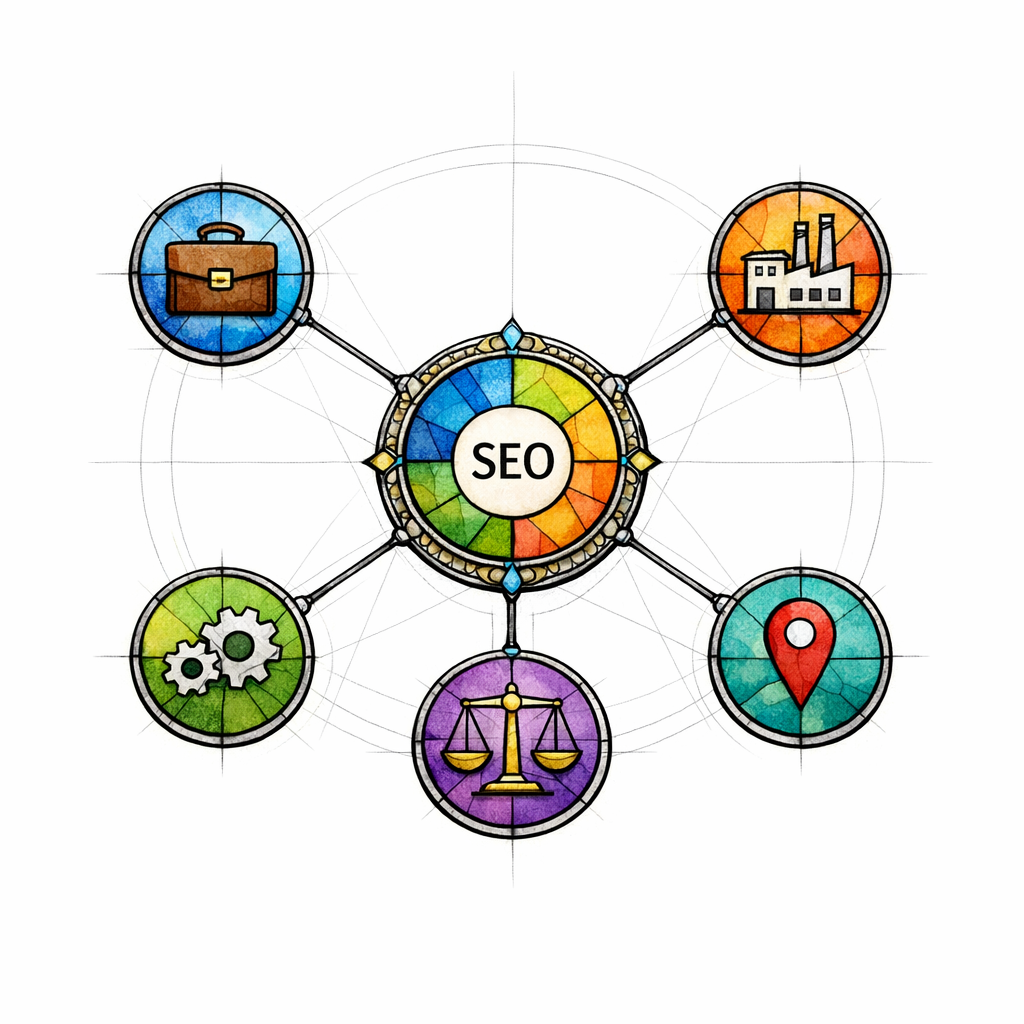
Think in clusters, not randomness. Each high-intent page should live in an obvious place in your navigation, and each cluster should have a “hub” page that explains the category clearly.
- Services hub → virtual receptionist, answering service, inbound, outbound, overflow, 24/7
- Industries hub → medical, legal, home services, SaaS, e-commerce
- Use cases hub → after-hours, appointment booking, lead qualification, multi-location routing
- Comparisons hub → vs pages, alternatives, model comparisons
- Locations hub → cities, states, regions (only where relevant)
This structure prevents cannibalization (multiple pages fighting for the same keyword) and makes internal linking natural. It also signals topical authority: you do not merely mention “medical answering service.” You build an entire mini-universe around it.
On-page elements that turn high-intent traffic into booked calls
Make the promise explicit, then prove it

High-intent pages should open with a plain promise: what you do, for whom, and the primary outcome. Then prove it with specifics: coverage hours, staffing model, training, QA, onboarding timeline, and reporting cadence.
Write for “YMYL” expectations when healthcare or legal is involved

When your pages influence medical or legal decisions, readers and quality systems scrutinize trust more aggressively. The safest approach is to build pages that meet the spirit of Google’s Search Quality Rater Guidelines around experience, expertise, and transparency, especially for topics that can impact wellbeing or finances.
Use structured data where it actually helps

If you have a local footprint, structured data can help search engines interpret your business details more consistently. Use LocalBusiness structured data documentation as a reference, and keep your name, address, and phone consistent wherever it appears.
Do not treat structured data like a cheat code. It is a formatting layer, not a substitute for real content, real offers, and real proof.
What changed and what’s new: the SEO rules that matter right now

SEO did not “die.” It got stricter about intent, trust, and manipulation. The practical effect is that thin service pages, mass-produced city pages, and copycat comparisons are less stable than they used to be.
If you publish pages at scale, you must understand and avoid patterns described in Google Search spam policies. In particular, do not build your growth plan on tactics that resemble “scaled content abuse” or “site reputation abuse,” because high-intent SERPs are exactly where enforcement hurts the most.
On the bright side, this is good news for serious operators. Call center buyers can smell nonsense. So can the algorithm. The brands that write pages like adults tend to outlive the brands that write pages like slot machines.
Common mistakes and misconceptions (the sins that keep you off page one)
Mistake: One generic “Answering Service” page for everything

A single page cannot rank well for “medical answering service,” “legal intake answering service,” “24/7 answering service,” and “call center lead generation” without becoming a bloated mess. Split by intent. One page, one job.
Mistake: “We do it all” messaging with no operational detail

High-intent buyers want to know what happens when reality hits: call spikes, angry callers, urgent escalation, wrong-number filtering, bilingual needs, and appointment reschedules. If your page avoids operational truth, it will attract tire-kickers and repel decision-makers.
Mistake: Comparison pages that read like hit pieces
If your “vs” page is just insults, it will not convert, and it can backfire. Comparisons must be fair, specific, and updated. The goal is to help a buyer choose, not to perform dominance.
Mistake: Location pages that pretend you have offices everywhere
Publishing hundreds of thin city pages is a common trap. If you have real local operations, build real local pages. If you serve nationally, build pages that emphasize national coverage, time zones, and workflows instead of pretending to be “near me” in every zip code.
Mistake: Treating compliance keywords like decorations
If you target “HIPAA” or regulated outbound terms, your page must be serious, clear, and consistent with your actual service. Do not borrow trust you have not earned. The buyer will test you on the first sales call.
What to do next (a practical checklist)

- Pick your top 10 money keywords and map each to exactly one dedicated landing page (no duplicates, no “catch-all” clutter).
- Create a service-page cluster (virtual receptionist, answering service, 24/7, overflow, inbound, outbound) and link them from a single Services hub page.
- Create at least 3 industry pages that match your best-fit verticals (medical, legal, home services is a common trio).
- Add a pricing philosophy page that explains how pricing works, what drives costs, and what packages include.
- Publish 2–4 comparison pages that answer real buyer questions with clear criteria and honest tradeoffs.
- Upgrade trust blocks on every high-intent page: process, QA, onboarding, reporting, and what happens when something goes wrong.
- Decide your “proof plan”: case studies, anonymized metrics, sample call summaries, scripting examples, or client quotes you can legally share.
- Run a cannibalization check so you do not have multiple pages competing for “virtual receptionist” or “answering service.”
- Write one internal-linking rule: every supporting page must link back to its hub, and hubs must link to the money pages.
Get a free SEO audit today!

If your site is getting impressions but not leads, the problem is usually not “more content.” It is missing high-intent pages, unclear positioning, and trust gaps where buyers hesitate. Content God can diagnose those gaps fast and show you exactly which pages to build first, which pages to merge, and which pages to rewrite for conversion.
Get a free SEO audit today! Then, if you are tired of guessing and ready to follow the doctrine: Stop praying for better search results — download your free copy of the SEO Bible and learn the true path to SEO Salvation.