




AEO + GEO Explained: How to Write Content That Shows Up in AI Answers, Voice Results, and Featured Snippets
Search is no longer just a list of blue links. Your customers now get “the answer” directly inside the results, inside voice assistants, and inside AI-generated summaries, and that means the old playbook of “rank a page and hope they click” is bleeding leads.
This article is for home services businesses, healthcare and health-adjacent brands, legal marketers, BPO and receptionist services, e-commerce, SaaS, agencies, and any local or multi-location business that needs predictable visibility. You will learn what AEO (Answer Engine Optimization) and GEO (Generative Engine Optimization) actually mean, what changed recently, and how to structure content so your brand becomes the source behind the answer.
One quick note before the sermon begins: Content God stands for Content Generated on Demand. We did not notice the whole “God” thing until it was too late. And now that the universe has spoken, we will proceed with the appropriate omniscience.
Definitions: AEO vs. GEO (and why you need both)

Answer Engine Optimization (AEO) is the discipline of writing and structuring content so search engines can lift a clean, accurate answer and display it directly in results. This includes featured snippets, “People also ask” style question formats, and voice-style responses, all of which behave like answer boxes rather than traditional rankings.
Generative Engine Optimization (GEO) is the discipline of making your content easy for AI systems to summarize, attribute, and cite when they generate responses. The goal is not just “ranking.” The goal is becoming the referenced source that the model trusts and uses.
In practice, AEO wins you the short, quotable “single best answer.” GEO wins you the broader “explained answer,” where AI blends multiple sources into a synthesized response. If you want consistent leads, you want both: one to capture the quick decision-maker, and one to capture the researcher who is being guided by AI.
What changed (and why old SEO alone is not enough)

Google has publicly expanded AI-generated summaries in Search with AI Overviews in Google Search, which changes how visibility works at the top of the results. When the answer shows before the organic listings, your brand must be the source, not merely the page that “could have been clicked.”
At the same time, Google continues to emphasize writing that is genuinely useful to humans, not content designed to game rankings, in its guidance on creating helpful, reliable, people-first content. AEO and GEO are not tricks; they are formats and signals that help the engine understand your expertise and pull it into answer experiences.
Finally, answer-first results reward clarity and structure more than ever. When you make your content scannable, factual, and explicit, you are not just improving UX. You are making extraction and summarization easier for machines, which is the new doorway to demand.
The big idea: write for extraction, then for persuasion

Most content fails in AI answers for one reason: it tries to persuade before it answers. AEO and GEO flip that. You answer first, cleanly and confidently, then you expand, qualify, and convert.
Think of your page like a service tech arriving at a job. First: diagnose, state the problem, give the straightforward fix. Then: show the homeowner your credentials, your process, and your proof. The answer engine wants the diagnosis sentence. The human wants the reassurance that you are the right choice.
How featured snippets and “answer boxes” actually select content
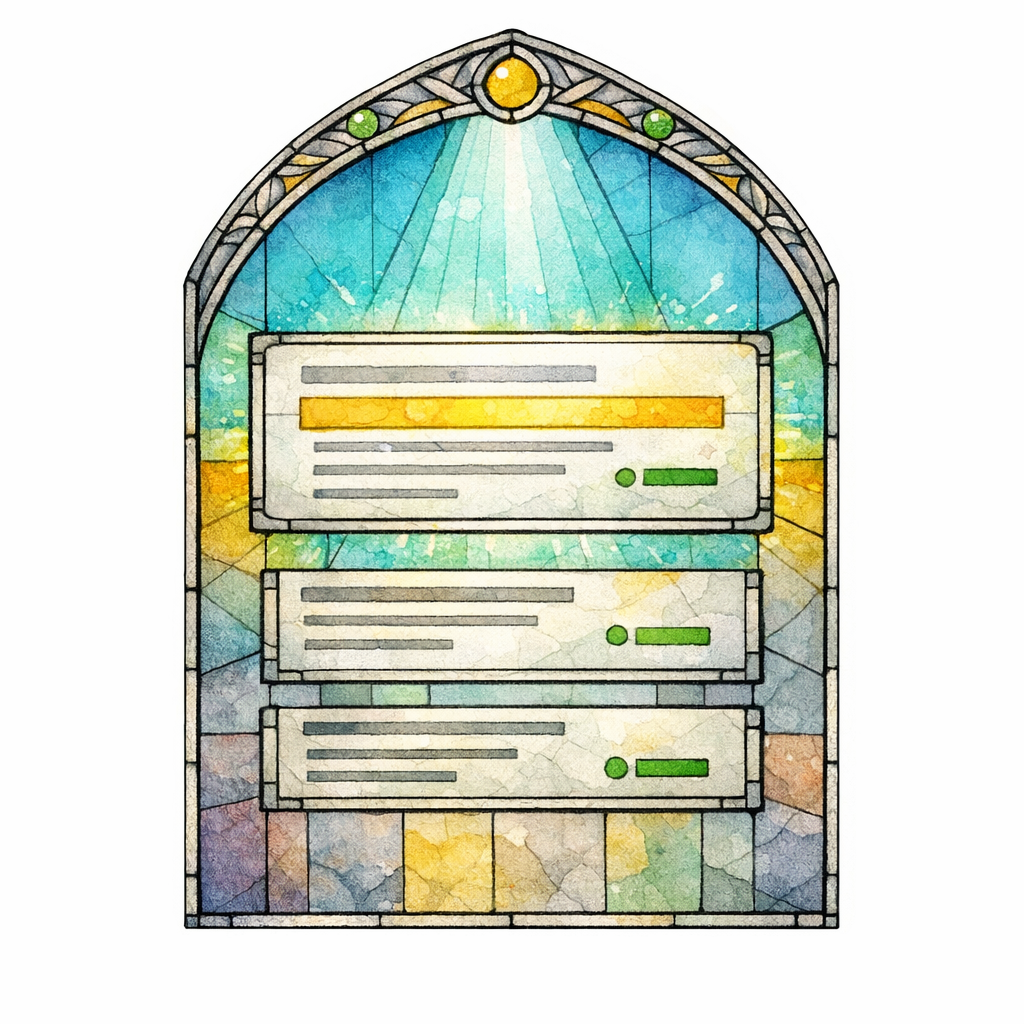
A featured snippet is a special result where Google displays a portion of a page directly on the results page. Google explains what featured snippets are and how they can be controlled in its help documentation about featured snippets in Google Search.
For AEO strategy, the implication is simple: your page must contain a short, direct answer that can stand alone without the reader needing context. Then, your page must support that answer with details, steps, examples, and caveats, so the engine sees completeness and the user sees credibility.
If you are worried about losing clicks, remember that answer visibility is also brand visibility. Being quoted builds recognition, and recognition increases conversions when the user does need to choose a provider.
The anatomy of an AEO-optimized answer block (copy this)

Your “answer block” is a small section near the top of the page that is engineered to be lifted. It is not fluff. It is the cleanest representation of your expertise in 40 to 80 words.
One-sentence definition: Define the term or directly answer the question in plain language.
- One-sentence definition: Define the term or directly answer the question in plain language.
- One to three key qualifiers: State the conditions that change the answer (location, budget, severity, timeframe).
- One next step: Tell them what to do now (check, measure, call, schedule, compare).
Immediately after the answer block, add a short expansion section with bullets. Bullets tend to map well to snippet formats because they are cleanly segmented and easy to extract.
GEO optimization: write so AI can trust, summarize, and cite you

Generative systems do not only look for “keywords.” They look for stable facts, clear entities, consistent terminology, and content that reads like a reliable reference. Your job is to become the calm, authoritative source the machine wants to quote when it needs to be right.
That means your content must be explicit about who it is for, what it covers, what it does not cover, and what evidence supports it. Especially in healthcare, legal, and safety-sensitive home services topics, vague content tends to be ignored or heavily qualified by the model.
GEO-friendly writing signals you can implement without a redesign

- Entity clarity: Use consistent names for services, conditions, locations, and products.
- Reasoned structure: Definitions, steps, alternatives, tradeoffs, and “when to call a pro.”
- Sourceable statements: Make your claims precise enough to be quotable, not poetic.
- On-page trust: Put the author, the business, and the credentials in plain sight.
The machine is not impressed by hype. It is impressed by coherence.
Structured data: the “labels” that help answers travel

Structured data helps search engines understand your content and can enable certain search features. Google explains the basics in its documentation on structured data for Google Search.
For AEO and GEO, think of structured data as your liturgy. You are not asking the engine to “figure it out.” You are telling it what the page is, what question it answers, and how the parts relate.
FAQPage markup for question-led content (use with restraint)

If you have genuine Q&A content, FAQ structured data can help search engines interpret it. Google provides implementation details and guidance in its documentation on FAQPage structured data.
- Use it for real questions users ask, not stuffed keyword variants.
- Answer like a professional, not like a sales page.
- Keep answers consistent with the main content so the page doesn’t contradict itself.
Do not mass-produce thin FAQs across every page. Answer engines can smell templated filler the way a plumber can smell a hidden leak.
Voice search content and “speakable” formatting

If you are targeting voice-style answers, prioritize natural language questions and short, spoken-friendly responses. Google has specific documentation for Speakable structured data, which reflects how voice-oriented experiences may consume certain content formats.
Even without special markup, you can write “voice-ready” by using short sentences, avoiding jargon, and defining terms the first time you use them. If a sentence sounds awkward when read aloud, it will usually perform poorly as an extracted answer.
Industry playbooks: how AEO + GEO looks in the real world

Home services wins in answers when you turn your expertise into simple diagnostic pathways. Your prospects are often stressed and time-sensitive, so your best AEO content answers “what is this,” “how urgent is it,” and “what should I do first,” then moves into service-area relevance and booking intent.
- Write “symptom to cause” pages: “AC blowing warm air,” “breaker keeps tripping,” “roof leak around chimney.”
- Use decision framing: “DIY checks” versus “call a licensed pro” with clear safety notes.
- Localize the proof: Mention city-specific factors like climate patterns, housing stock, or local code considerations without turning the page into keyword spam.
For local trust, your Google Business Profile and business representation must be accurate and consistent. Google’s guidance on representing your business on Google is the baseline for getting the fundamentals right.
Home services (HVAC, plumbing, electrical, roofing, pest control)

For local trust, your Google Business Profile and business representation must be accurate and consistent. Google’s guidance on representing your business on Google is the baseline for getting the fundamentals right.
Healthcare and health-adjacent brands

Healthcare content is judged through a trust lens. You need clean definitions, cautious wording, and clear boundaries. The goal is not to sound smart; it is to sound safe and clinically grounded.
Google’s evaluator guidance discusses high-stakes “Your Money or Your Life” topics and the importance of experience and expertise in its Search Quality Rater Guidelines. For GEO optimization, that translates into showing author qualifications, editorial standards, and transparent sourcing.
- Create “plain-English” condition pages: definition, symptoms, causes, diagnosis, treatment options, and when to seek care.
- Add medication and product explainers: what it is, who it’s for, risks, interactions, and what to ask a clinician.
- Build trust modules: medical reviewers, update dates, and clear disclaimers without hiding behind them.
Legal and law firm marketing teams

Legal searchers want certainty, but the law demands nuance. Your answer block should define the issue, then immediately add the jurisdictional qualifier and the “talk to a lawyer” trigger condition.
- Practice-area pages with direct answers: “What is a demand letter?” “What happens after a DUI arrest?”
- Process content: “What to expect in the first consultation,” “timeline of a personal injury claim.”
- Evidence of legitimacy: attorney bios, case types handled, and clear intake next steps.
In GEO terms, your job is to be the source that reads like a reference, not a billboard. When the model is unsure, it gravitates toward pages that are explicit about definitions and limitations.
BPO, call center, and receptionist service companies

These buyers compare. They want to know what you do, what you don’t do, and what the handoffs look like. Answer engines love comparison formats because they map cleanly to “pros/cons” and “best for” summaries.
- Write “X vs Y” pages: in-house reception vs virtual receptionist, call center vs answering service.
- Spell out workflows: scripts, escalation paths, integrations, reporting.
- Clarify pricing models: per minute, per call, per seat, and what triggers overages.
If you want to show up in AI answers, your differentiators must be concrete and repeated consistently across your site, not hidden inside a PDF or sales deck.
E-commerce brands

E-commerce AEO is not about writing “best” lists for everything. It is about removing purchase anxiety by answering product questions clearly and repeatedly across category pages, product pages, and supporting guides.
- Build Q&A hubs: sizing, materials, care, compatibility, shipping, returns.
- Write “use case” pages: “best eyewear for screen time,” “best bedding for hot sleepers.”
- Use constraints: “If you have X, avoid Y” is the type of statement that gets quoted.
GEO optimization here is about consistent terminology and attribute clarity. If your product naming and specs are inconsistent, AI summaries become vague, and vague does not convert.
SaaS and technology companies

SaaS wins when it becomes the reference manual for its category. AI answers often synthesize definitions and steps, so your content should include both: what something is and how to implement it.
- Integration pages: what it does, setup steps, common errors, and who it’s for.
- Alternatives and comparisons: “best for” segments, tradeoffs, and migration paths.
- Glossaries with teeth: definitions plus examples plus “why it matters.”
Do not hide the specifics behind a gated form if you want to be the cited source. Gate the template, not the definition.
Content structure for answers: the “Answer-First Outline”
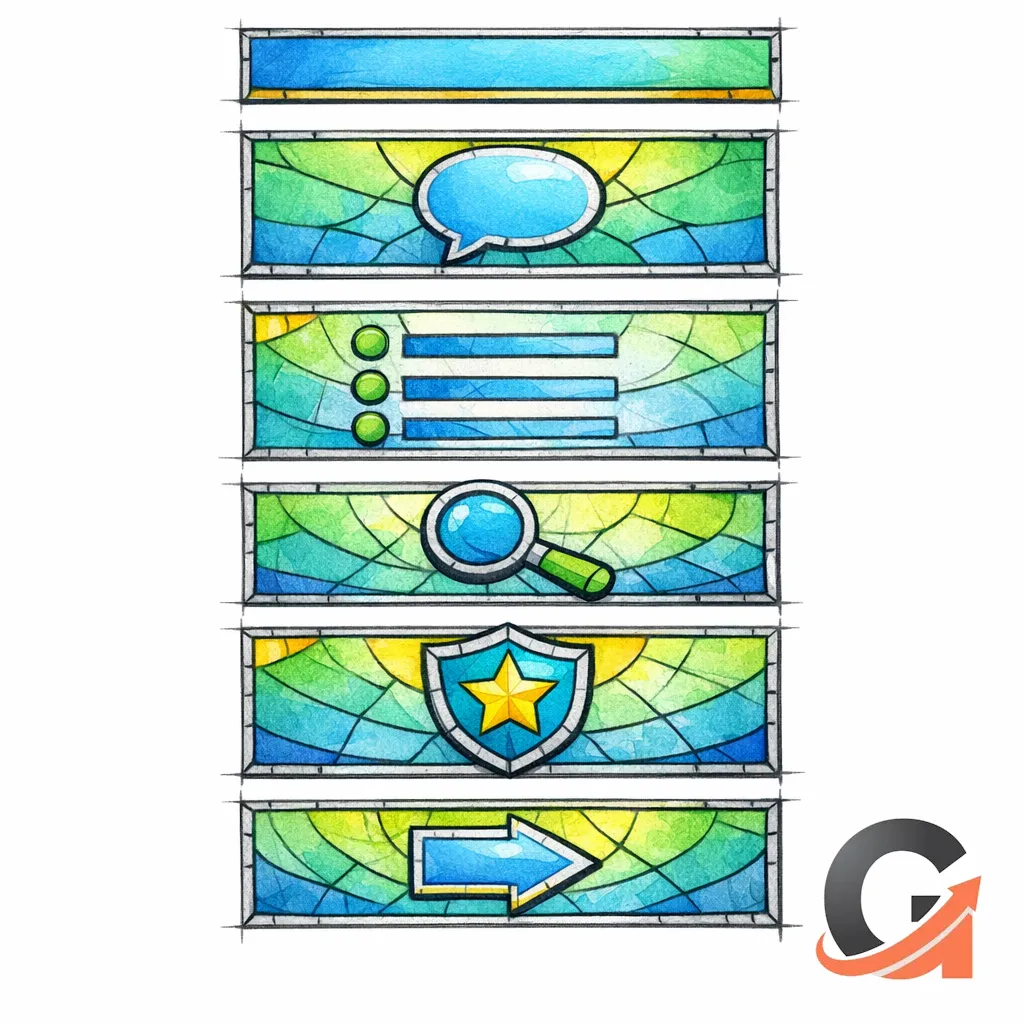
This is the structure we recommend when you want a single page to perform in organic rankings, featured snippets, and AI summaries. It is simple, repeatable, and scalable across service pages, guides, and comparison content.
- H1: The question or the job-to-be-done (“How to fix…”, “What is…”, “Best… for…”).
- Answer block: 40 to 80 words, plain language, quotable.
- Quick list: steps, checks, options, or takeaways in bullets.
- Deep explanation: the why, the how, the edge cases.
- Trust proof: credentials, experience, service area, methodology.
- Conversion path: next step, estimate request, appointment, download.
This outline is not sacred scripture, but it is close. It creates a clean extraction layer and a strong persuasion layer, and it keeps the page from collapsing into waffle.
Featured snippet optimization tactics that still work

Because featured snippets display a portion of your page, you are optimizing for selection, not just for ranking. Google’s documentation about how featured snippets work is a useful reminder that the engine chooses what to show and when.
- Match the question verbatim: use the exact phrasing people use in the real world.
- Answer immediately: do not make the user scroll past your brand story.
- Use list formats for steps: bullets for options, numbered steps for process.
- Define terms before debating them: definitions get lifted more often than opinions.
If you already rank on page one and you are not winning snippets, it is usually because your page never provides a clean, standalone answer sentence. Fix that and you often fix the snippet opportunity.
People Also Ask strategy without turning your site into an FAQ dumpster
Question-led content is powerful, but the common mistake is to publish dozens of near-duplicate Q&A pages that cannibalize each other. The better path is clustering: build one strong core page, then add a handful of supporting pages that answer distinct questions with distinct intent.
- Core page: the main topic (“Tankless water heater cost”).
- Support pages: sub-questions (“Is it worth it?”, “How long do they last?”, “What size do I need?”).
- Internal links: point support pages back to the core page with natural anchor text.
This creates a knowledge network that both humans and machines can navigate. AEO loves clarity, and GEO loves connected coverage.
Local GEO: how to become the “obvious” choice in regional AI answers
- Service-area specificity: city pages that describe real coverage and constraints, not spun text.
- Proof of presence: address and service area consistency aligned with Google’s business representation guidelines.
- Local FAQs that matter: permits, timelines, seasonal issues, and common local homeowner concerns.
If your brand is multi-location, treat each location like a first-class entity with its own proof, its own team signals, and its own localized “answer block” content. Regional growth comes from repeatable clarity, not from repeating the same paragraph with a different city name.
Trust is the ranking factor you can actually control
Whether you are writing for AI answers SEO, voice search content, or featured snippet optimization, trust is the multiplier. When your page is the clearest and safest source, engines are more willing to quote it.
For high-stakes topics, Google’s evaluator guidance emphasizes experience, expertise, and trust considerations in the Search Quality Rater Guidelines. You do not need to obsess over jargon. You need to show your receipts: credentials, real experience, and content that reads like it was written by someone accountable.
- Add author and reviewer context: especially for healthcare and legal.
- Use update hygiene: review and refresh pages that answer time-sensitive questions.
- Be explicit about limits: “This varies by state,” “Talk to a licensed electrician,” “Seek medical advice.”
Omniscience is a brand promise. But even Content God respects scope of practice.
Common mistakes and misconceptions (that quietly kill AEO + GEO)
- Mistake: Writing introductions that delay the answer. If the answer is not visible immediately, it is harder to extract, and users bounce.
- Mistake: Publishing “SEO content” that never says anything specific. AI summaries prefer concrete definitions and steps over vague marketing language.
- Mistake: Treating FAQ markup like a cheat code. FAQ structured data is for genuine Q&A, as described in Google’s FAQPage documentation, not for stuffing every keyword variant you can imagine.
- Mistake: Ignoring trust signals on YMYL topics. If the page reads unaccountable, it is less likely to be relied on for sensitive queries, which aligns with the emphasis on trust in the Search Quality Rater Guidelines.
- Mistake: Optimizing only for rankings, not for answer selection. Featured snippet inclusion follows its own behavior patterns, which Google discusses in its featured snippets help article.
The unforgivable sin is vagueness. Specificity is salvation.
A practical AEO strategy workflow (weekly, not theoretical)
AEO is easiest when you treat it like production, not inspiration. The goal is to ship answer-ready pages consistently, then iterate based on what the SERP rewards.
- Week 1: Identify 10 high-intent questions your prospects ask on calls and intake forms.
- Week 2: Publish 2 to 4 pages using the Answer-First Outline, each with a quotable answer block.
- Week 3: Add 3 to 5 supporting sub-question sections to your best-performing pages.
- Week 4: Improve trust modules, internal links, and clarity based on real user questions.
If you do this for 90 days, you build a library that is engineered for extraction. That is how you stop relying on one lucky ranking and start owning a topic.
A practical GEO optimization workflow (how to become the cited source)
GEO is the discipline of becoming “the page that explains it best.” When AI summaries are built from multiple sources, you want to be the one that provides the crisp definition, the clean steps, and the safe qualifiers.
- Write like a reference: definition, scope, steps, edge cases, and next actions.
- Standardize terminology: one name per concept across the site.
- Build topic clusters: one pillar page plus supporting pages that answer distinct sub-questions.
- Implement structured data where it fits: follow Google’s structured data guidance and keep markup aligned with visible content.
The engine cannot cite what it cannot parse. Make your expertise legible.
What to do next (scannable checklist)
- Pick 5 target queries: one “definition,” one “cost,” one “steps,” one “best for,” and one “vs” comparison.
- Add an answer block to each page: 40 to 80 words, then a bullet list.
- Refactor headings into questions: make the page look like the query set it intends to answer.
- Add trust signals: author/reviewer, credentials, service area, and clear boundaries.
- Use structured data only where true: apply FAQPage markup only to genuine Q&A content.
- Review local accuracy: align listings and on-site business info with Google’s business representation guidelines.
- Update one page per week: clarity improvements often beat new content volume.
Do these, and you will not just “rank.” You will be repeated. In the age of AI answers, repetition is revenue.
Get a free SEO audit today!
If you want your content to show up in AI Overviews, featured snippets, and voice-style answers, we will tell you exactly what to fix and what to publish next. Request your audit from Content God and we will map your fastest path to answer visibility and lead growth.
Stop praying for better search results — download your free copy of the SEO Bible and learn the true path to SEO Salvation.